Hardwood floors are durable, but they are not maintenance-free. Dirt, grit, spills, moisture, cleaning products, furniture, pets, and changes in indoor humidity can all affect how a wood floor looks and performs over time.
The good news is that routine care does not need to be complicated. The most important habits are removing dry dirt regularly, cleaning spills promptly, using products compatible with the flooring and finish, and avoiding unnecessary moisture.
If you are learning how to clean hardwood floors, the first thing to understand is that wood flooring should not be treated like tile or other surfaces that can tolerate large amounts of water. Wood is hygroscopic, meaning it responds to moisture in its environment. Excess moisture can contribute to problems such as cupping, warping, cracking, finish deterioration, and other forms of damage.
The National Wood Flooring Association recommends regular removal of dirt and grit and cautions against excessive moisture, vinegar, traditional wet mops, and steam cleaners on wood flooring. Manufacturer instructions can vary, so the care instructions for your particular floor should always take priority.
This guide explains how to clean hardwood floors safely, what products and methods to avoid, how frequently to clean, and how to recognize when a floor has a problem that cleaning alone cannot solve.
What Is the Best Way to Clean Hardwood Floors?
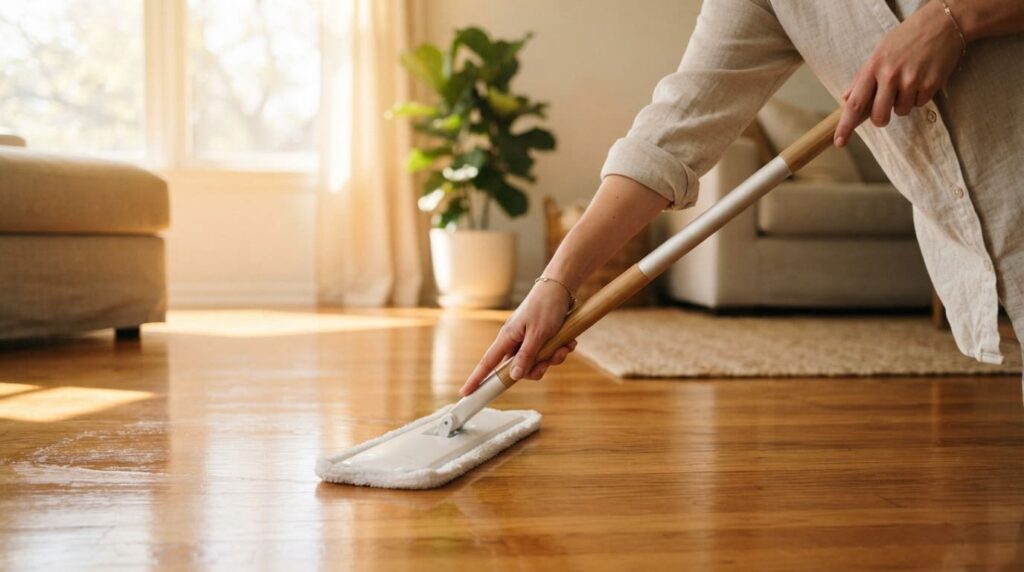
For most hardwood floors, effective maintenance starts with removing dry dirt before using any cleaning solution.
A practical routine includes:
- Sweep or dust mop regularly to remove loose dirt and grit.
- Vacuum using an appropriate hard-floor setting.
- Wipe up spills as soon as they occur.
- Use a hardwood-floor cleaner recommended for your flooring or finish.
- Keep moisture under control.
- Avoid abrasive tools and incompatible cleaning products.
- Follow the flooring manufacturer’s maintenance instructions.
The NWFA recommends sweeping, dust mopping, or vacuuming with the beater bar turned off to remove dirt and grit. Its technical guidance also specifically warns against vinegar, traditional mops that can apply excessive moisture, and steam cleaners unless otherwise recommended by the finish or flooring manufacturer.
Shaw’s current hardwood care guidance similarly recommends removing loose dirt regularly, cleaning spills immediately, using its recommended cleaner, and maintaining indoor relative humidity between 35% and 55%.
Before Cleaning, Identify Your Hardwood Floor
The right cleaning approach starts with knowing what you have.
Solid hardwood is milled from a single piece of wood, while engineered hardwood consists of a real wood surface layer attached to a layered core. Both can be finished in different ways, and the finish plays an important role in determining how the floor should be maintained.
If you are not sure which type you have, Floorika’s guide on engineered vs. solid hardwood flooring provides a useful comparison.
You should also consider whether the floor is:
- Factory-finished
- Site-finished
- Finished with a polyurethane or other film-forming finish
- Oil-finished
- Wax-finished
- Previously refinished
These differences matter because cleaning products that are suitable for one finish may not be appropriate for another.
The NWFA specifically cautions against using cleaning products intended for film finishes on natural oiled floors and against using certain oil soaps, waxes, and other products unless they are recommended by the flooring or finish manufacturer.
What You Need to Clean Hardwood Floors
You do not need a large collection of cleaning products.
For normal maintenance, the basics are usually enough:
- Soft-bristle broom
- Dry microfiber dust mop
- Vacuum designed or configured for hard floors
- Hardwood-floor cleaner approved for your flooring
- Suitable microfiber or manufacturer-approved mop
- Clean absorbent cloths for spills
- Furniture protectors
- Appropriate entrance mats
The purpose of these tools is to remove dirt without introducing unnecessary abrasion or moisture.
A vacuum can be particularly useful for removing grit from between boards and around room edges. Just make sure the vacuum is appropriate for hard flooring and that a rotating brush or beater bar is not damaging the surface.
How to Clean Hardwood Floors Step by Step
1. Remove furniture and objects where practical
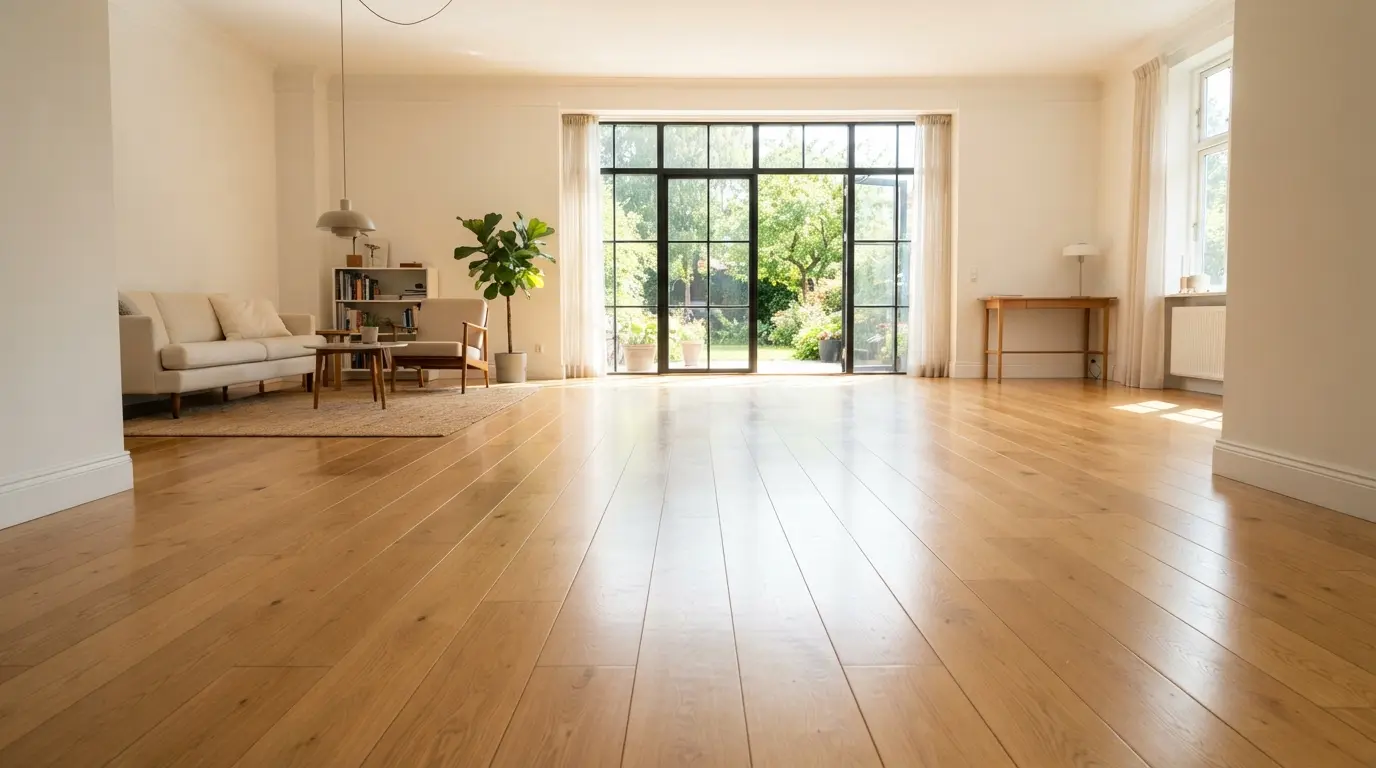
Move smaller furniture and objects out of the way so you can reach the entire floor.
Do not drag heavy furniture across hardwood. Sliding furniture can scratch the finish or create dents, particularly when grit is trapped underneath.
For heavier pieces, use appropriate moving equipment or protection designed to prevent direct contact between the furniture and floor.
2. Remove loose dirt and grit
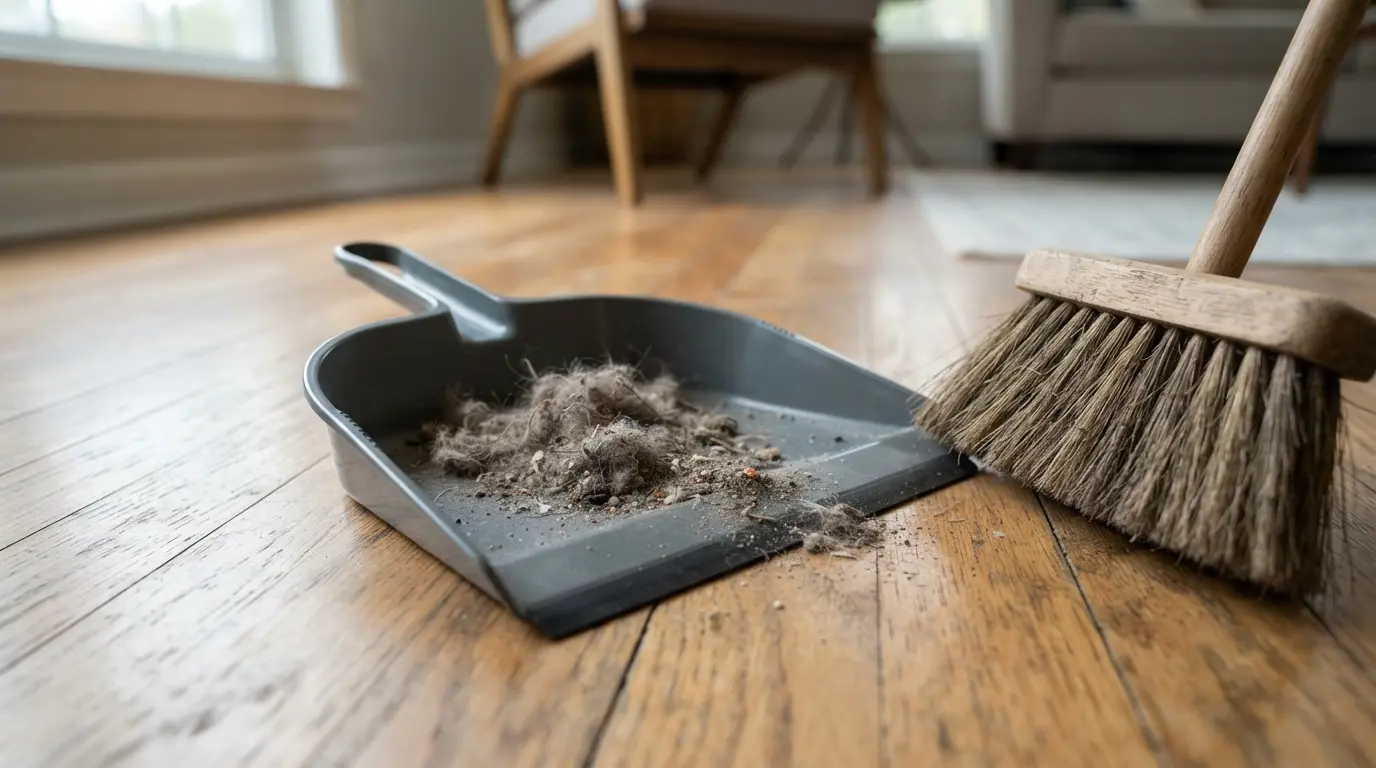
Start with dry cleaning.
Sweep, dust mop, or vacuum the floor before applying any cleaning solution.
This step is important because grit can become abrasive when repeatedly walked across the surface. The NWFA recommends regular removal of dirt and grit as part of routine hardwood maintenance.
Pay particular attention to:
- Entryways
- Hallways
- Around kitchen work areas
- Under dining tables
- Areas around exterior doors
- High-traffic walkways
3. Clean spills immediately
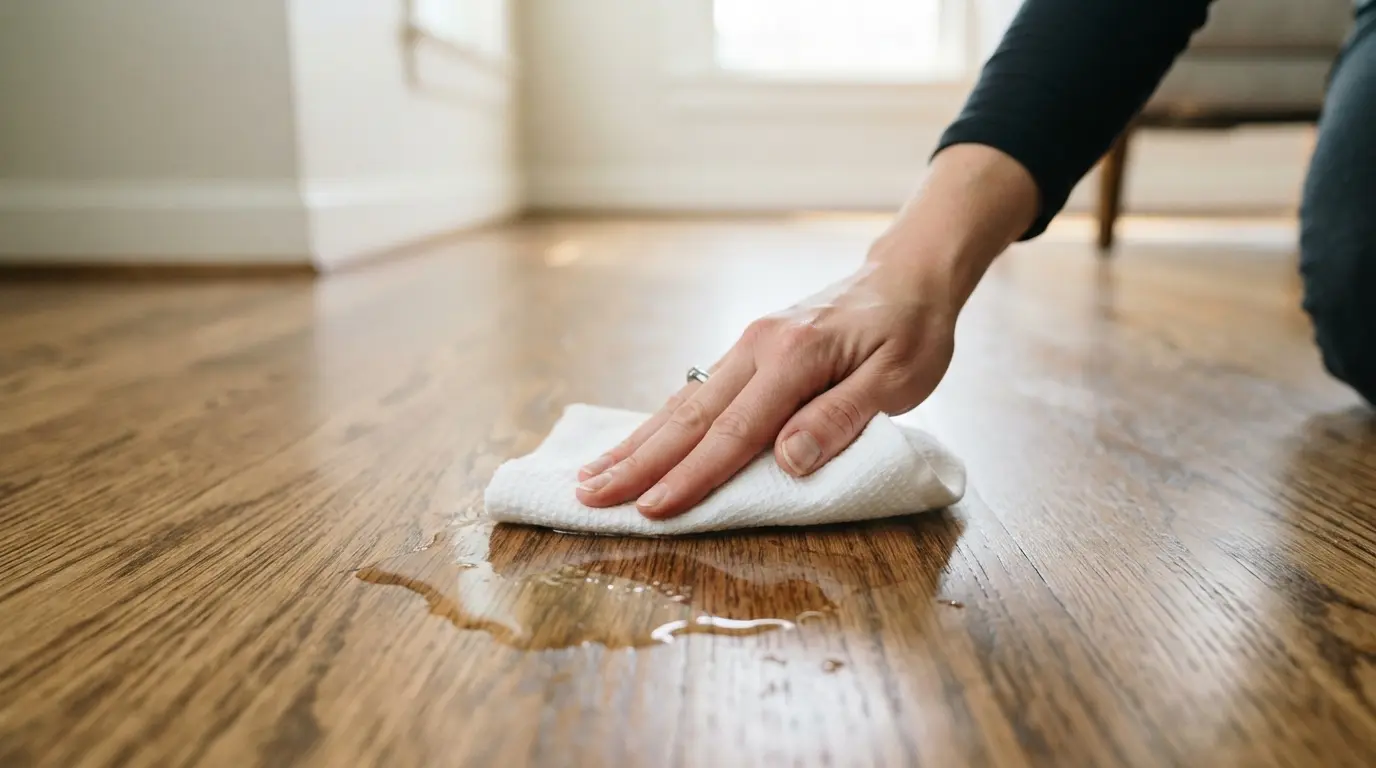
Do not wait until your scheduled cleaning day.
Blot or wipe up liquid as soon as possible using a clean, absorbent cloth.
Shaw specifically recommends wiping spills immediately with a clean, dry cloth. Bruce likewise recommends prompt spill cleanup and warns against allowing standing water to remain on hardwood floors.
4. Apply an appropriate hardwood-floor cleaner
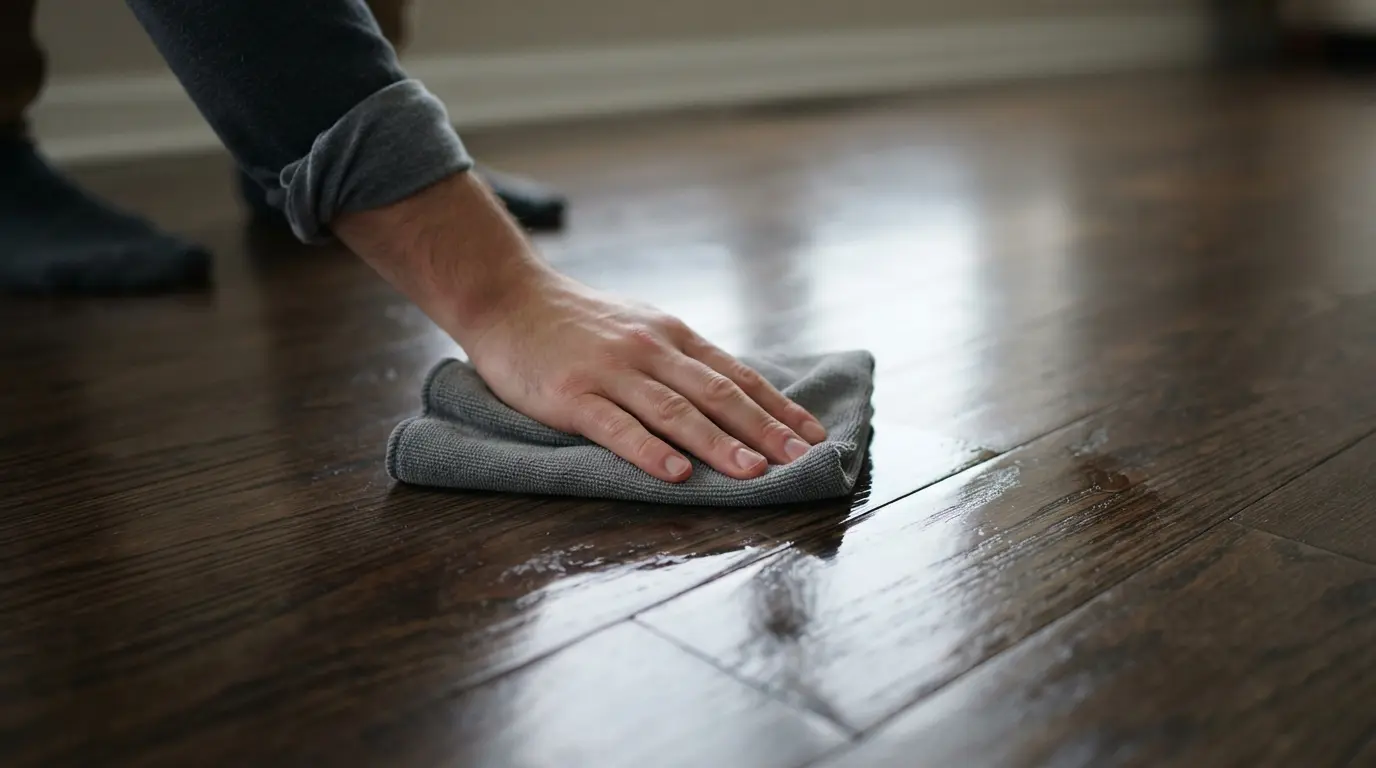
Choose a cleaning product that is compatible with your floor and finish.
Do not select a product simply because the label says it is suitable for “wood” or “multi-surface” cleaning. Check the flooring manufacturer’s instructions whenever possible.
Shaw recommends a neutral-pH flooring cleaner for its hardwood products, while Bruce recommends cleaners specifically designed for hardwood and warns against several categories of household cleaners.
5. Use controlled moisture
This is one of the most important parts of hardwood maintenance.
A hardwood floor should not be saturated during routine cleaning.
Where the flooring manufacturer permits damp cleaning, use a properly wrung mop or another method that controls the amount of liquid reaching the floor.
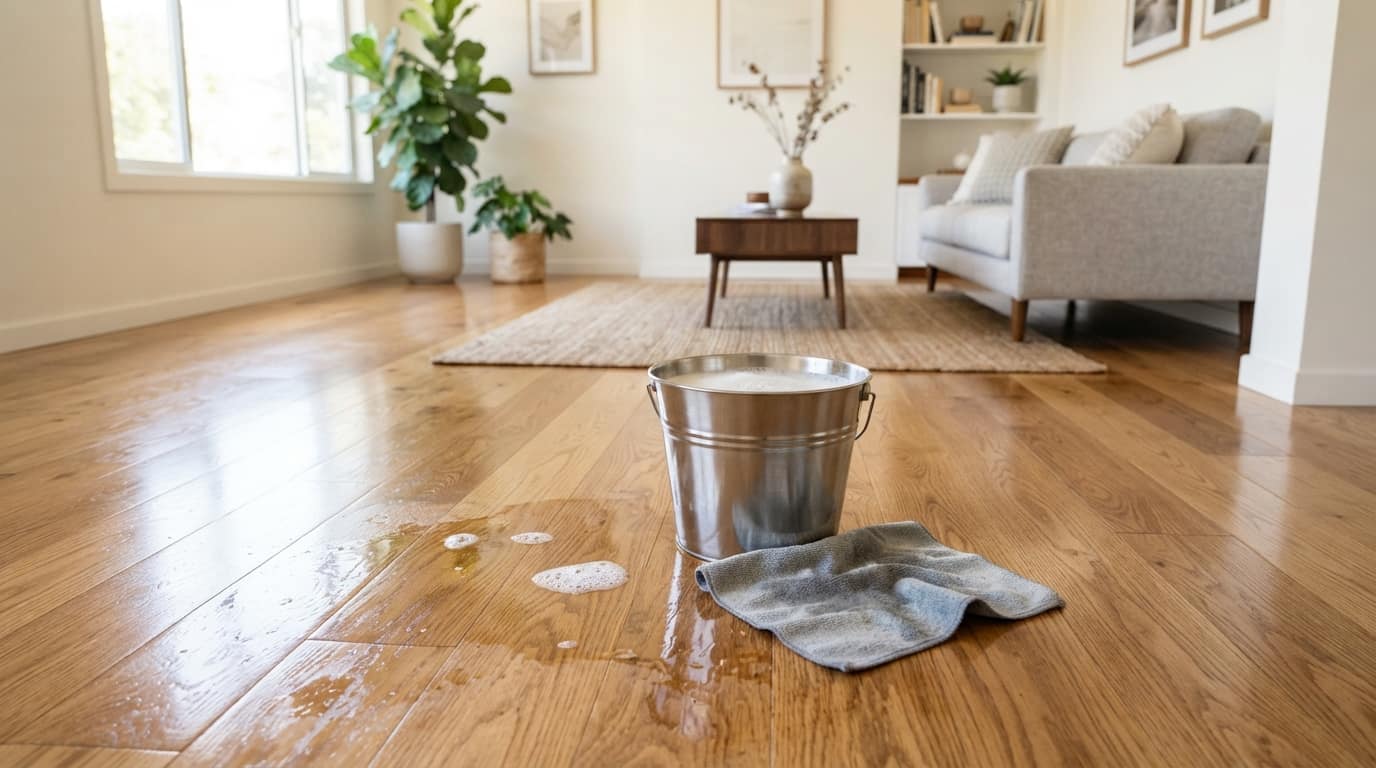
The NWFA warns against traditional mop-and-bucket cleaning because it can introduce too much moisture. Its guidance says standing water can contribute to cracks, splits, cupping, warping, finish degradation, discoloration, and sticky residue.
6. Do not leave standing water behind
After cleaning, the surface should not be left with puddles or wet areas.
If excess liquid remains, remove it promptly using a clean absorbent cloth and follow the flooring manufacturer’s instructions.
The goal is controlled surface cleaning, not soaking the floor.
Hardwood Floor Cleaning Methods Compared
| Cleaning Method | Main Purpose | Moisture Exposure | Key Consideration |
|---|---|---|---|
| Soft-bristle broom | Removes loose dust and debris | None | Useful for frequent dry cleaning |
| Dry microfiber mop | Captures fine surface dust | None | Suitable for routine maintenance |
| Hard-floor vacuum | Removes grit, dust, and hair | None | Use an appropriate hard-floor setting |
| Spray-and-wipe cleaner | Routine surface cleaning | Low | Use a compatible hardwood cleaner |
| Slightly damp mop | More thorough surface cleaning | Controlled | Only where the flooring instructions permit it |
| Traditional wet mop | Heavy surface cleaning | High | Can introduce excessive moisture |
| Steam mop | Uses heat and moisture | High | NWFA advises against steam cleaners on wood floors |
The table reflects general industry guidance, but manufacturer instructions for the specific flooring should take precedence. The NWFA, Shaw, and Bruce differ slightly in their cleaning procedures, but all emphasize avoiding unnecessary moisture and using compatible products.
How Much Water Can You Use on Hardwood Floors?
There is no universal amount of water that is safe for every hardwood floor.
The appropriate method depends on the floor’s construction, finish, installation, and manufacturer’s instructions.
A better principle is to minimize moisture and avoid standing water.
Some manufacturers recommend specific spray-and-wipe or near-dry cleaning methods. Bruce, for example, says not to use water or steam on its hardwood floors. Shaw recommends its hard-surface cleaner with a dry mop for its hardwood products. The NWFA allows a slightly moistened, well-wrung mop in situations where the finish manufacturer’s instructions permit damp cleaning.
That difference is important.
There is no single cleaning recipe that should automatically be applied to every hardwood floor.
Can You Use Vinegar on Hardwood Floors?
Vinegar is one of the most common DIY recommendations for cleaning hardwood floors. Current industry guidance does not support treating vinegar as a universal wood-floor cleaner.
The NWFA specifically states that vinegar should not be used on wood floor finishes because it is acidic and can degrade the finish. Bruce similarly advises against acidic substances such as vinegar for its hardwood flooring and says repeated use can dull or degrade modern finishes.
So if an older cleaning article or social media post recommends a vinegar-and-water solution, check the flooring manufacturer’s current instructions before using it.
For hardwood flooring, “natural” does not automatically mean “safe.”
Can You Use a Steam Mop on Hardwood Floors?
Steam mops are another commonly promoted shortcut that deserves caution.
The NWFA advises against steam cleaners on wood floors, explaining that vapor can penetrate wood fibers and cause irreversible damage to flooring and finish. Bruce also says not to use steam on its hardwood floors, while Shaw’s hardwood care guidance advises against steam mops.
Steam introduces both heat and moisture, which is precisely why it is unsuitable for many hardwood flooring systems.
If you want a deeper explanation, Floorika already has a dedicated article covering the dos and don’ts of steam cleaning hardwood floors.
What Cleaning Products Should You Avoid?
The exact restrictions depend on the flooring and finish, but several product categories deserve caution.
Vinegar and acidic cleaners
The NWFA specifically advises against vinegar on wood floor finishes.
Ammonia-based cleaners
Bruce advises against ammonia-based cleaners because they can affect hardwood flooring and its finish.
Wax-based products
Wax is not appropriate for every hardwood finish. The NWFA advises against wax on non-waxed surface finishes.
Oil soaps
Oil soaps can leave residue or be incompatible with certain finishes. The NWFA and Bruce both caution against their use unless specifically recommended for the floor.
Abrasive products
Anything designed to aggressively scrub the surface can create unnecessary wear.
Generic “shine” or rejuvenation products
The NWFA advises against products claiming to restore, rejuvenate, polish, renovate, or add shine unless the flooring or finish manufacturer specifically recommends them.
How Often Should You Clean Hardwood Floors?
There is no single schedule that works for every household.
A home with pets, children, exterior entrances, or heavy foot traffic will generally need more frequent dry cleaning than a rarely used room.
A practical maintenance schedule can look like this:
| Frequency | Recommended Maintenance |
|---|---|
| Daily or as needed | Remove visible dirt and clean spills immediately |
| Several times per week | Sweep, dust mop, or vacuum high-traffic areas |
| Weekly or according to manufacturer guidance | Perform routine cleaning with an approved hardwood cleaner |
| Periodically | Clean beneath furniture and inspect high-traffic areas |
| As needed | Address scratches, residue, dullness, finish wear, or damage |
Shaw’s current care routine recommends daily spot cleaning and loose-dirt removal, weekly use of its recommended cleaner, and periodic attention to rugs, furniture, and high-traffic areas.
The right frequency should therefore be based on the actual conditions in your home rather than a rigid calendar.
How to Clean Hardwood Floors in High-Traffic Areas
High-traffic areas often show wear sooner because they receive more foot traffic and more exposure to dirt and grit.
Instead of responding with increasingly aggressive cleaning, focus on prevention.
Use suitable mats at entrances, remove outdoor dirt regularly, clean spills promptly, and vacuum or sweep areas that receive frequent traffic.
Furniture protection also matters.
Bruce recommends mats, furniture protectors, and regular removal of loose soil and debris. Shaw similarly recommends area rugs in high-traffic locations and protectors under heavy furniture legs.
Floorika’s guide on how to protect hardwood floors from damage provides additional information on preventative care.
How Humidity Affects Hardwood Floors
Cleaning is only one part of hardwood maintenance.
Wood naturally expands and contracts in response to changes in moisture. Excessively dry or humid indoor conditions can therefore contribute to movement in wood flooring.
Shaw recommends maintaining relative humidity between 35% and 55% for its hardwood flooring. It explains that maintaining consistent humidity helps minimize natural expansion and contraction.
This is particularly relevant in homes exposed to seasonal heating and cooling changes.
If you notice persistent gaps, cupping, crowning, buckling, or other movement-related problems, do not assume that changing your cleaning method will solve the issue.
Floorika’s article on how humidity affects hardwood floors explores the subject in more detail.
How to Protect Hardwood Floors Between Cleanings
Good maintenance is largely preventative.
A few simple measures can reduce the amount of wear your floor experiences:
- Place appropriate mats near exterior entrances.
- Clean dirt and grit regularly.
- Use furniture protectors.
- Avoid dragging furniture.
- Trim pets’ nails.
- Clean spills immediately.
- Maintain appropriate indoor humidity.
- Limit prolonged direct sunlight exposure.
- Check high-traffic areas for early signs of wear.
Shaw recommends 35% to 55% relative humidity, furniture protection, high-traffic area rugs, and limiting prolonged exposure to sunlight. Bruce also recommends entrance mats, furniture protectors, pet nail maintenance, and prompt spill cleanup.
These steps can reduce the amount of cleaning required while also helping protect the floor’s finish.
What If Your Hardwood Floor Still Looks Dull After Cleaning?
Not every dull floor is dirty.
A floor can appear dull because of:
- Cleaning residue
- Surface wear
- Scratches
- Finish deterioration
- Previous use of incompatible products
- Discoloration
- Age-related finish wear
If appropriate cleaning removes surface dirt but the floor still looks worn, adding more cleaner is unlikely to solve the underlying problem.
Floorika’s guide on why hardwood floors look dull, including causes and restoration options can help you distinguish between surface buildup and more substantial finish problems.
When Cleaning Is No Longer Enough
This is an important distinction for homeowners.
Cleaning removes dirt and residue. It does not repair damaged wood or recreate a finish that has worn away.
If a hardwood floor has deep scratches, significant finish wear, damaged boards, gaps, dents, discoloration, or other persistent problems, it may require a different type of treatment.
Depending on the condition, that could mean:
- Spot repair
- Board repair
- Recoating
- Sanding
- Refinishing
- Replacement of damaged sections
- Full floor replacement
Bruce explains that recoating can add a new layer of finish for certain forms of surface wear, while refinishing involves sanding and applying new finish and is more appropriate for deeper scratches or worn finishes.
Floorika already has useful resources on what to expect during hardwood floor refinishing and the signs that your hardwood floor may need refinishing.
Common Hardwood Floor Cleaning Mistakes
Using too much water
Hardwood flooring does not benefit from being saturated. Excess moisture can damage the wood and finish.
Using a steam mop
Steam introduces heat and moisture and is discouraged by major hardwood-flooring guidance.
Using vinegar because it is a popular DIY solution
Popularity does not establish compatibility. The NWFA specifically advises against vinegar on wood floor finishes.
Using the wrong vacuum setting
A vacuum’s rotating brush or beater bar can be inappropriate for some hardwood surfaces.
Applying too much cleaner
More product does not necessarily produce a cleaner floor. Excess product can leave residue.
Dragging furniture
Even a clean floor can be scratched when heavy furniture is dragged across it.
Trying to fix a worn finish with stronger cleaners
If the finish itself is worn, aggressive cleaning will not restore it.
Ignoring indoor humidity
Hardwood responds to environmental moisture. Cleaning alone cannot compensate for consistently unsuitable humidity levels.
Frequently Asked Questions About Cleaning Hardwood Floors
What is the safest way to clean hardwood floors?
Start by removing loose dirt with a broom, dust mop, or suitable hard-floor vacuum. Then use a hardwood-floor cleaner recommended for your flooring and follow the manufacturer’s instructions regarding application and moisture.
Can I mop hardwood floors with water?
Do not assume that water is safe for every hardwood floor. Some manufacturers recommend controlled damp cleaning, while others advise against water. If damp cleaning is permitted, use minimal moisture and do not leave standing water.
Can I use vinegar to clean hardwood floors?
Vinegar should not be considered a universal hardwood cleaner. The NWFA specifically advises against vinegar on wood floor finishes, and Bruce similarly warns against acidic substances such as vinegar.
Can I steam mop hardwood floors?
Steam mops are generally not recommended for hardwood flooring. The NWFA, Bruce, and Shaw all provide guidance warning against steam or excessive moisture on wood flooring.
How often should I clean my hardwood floors?
Sweep, dust mop, or vacuum as needed to prevent dirt and grit from accumulating. Perform deeper routine cleaning according to the flooring manufacturer’s recommendations and the level of traffic in your home.
What is the best hardwood-floor cleaner?
There is no single cleaner that is ideal for every hardwood floor. Choose a product specifically recommended for your flooring or finish and follow its instructions.
Why does my hardwood floor look dull after cleaning?
The problem may be residue, surface wear, scratches, or deterioration of the finish rather than dirt. If appropriate cleaning does not improve the appearance, the floor may need professional assessment.
Can cleaning fix scratched hardwood floors?
Cleaning can remove dirt from scratches, but it cannot repair deep physical damage. Minor surface imperfections may have different treatment options depending on the finish and floor condition.
How do I know if my hardwood floor needs refinishing?
If the finish is significantly worn, scratches are deep, or the floor remains damaged or dull after appropriate cleaning, refinishing may be worth considering. A professional assessment can help determine whether refinishing, repair, recoating, or another solution is appropriate.
Keep Your Hardwood Floor Looking Its Best With the Right Care
Understanding how to clean hardwood floors is ultimately about using the least aggressive method that effectively removes dirt.
Regular dry cleaning, prompt spill removal, compatible cleaning products, controlled moisture, and sensible preventative measures can go a long way toward preserving a hardwood floor.
At the same time, homeowners should recognize the limits of cleaning. A cleaning routine can remove dirt, but it cannot repair deep scratches, damaged boards, severe finish wear, or structural problems.
That is why it is useful to distinguish routine maintenance from restoration and repair. When the problem is on the surface, cleaning may be enough. When the flooring itself has been damaged or the finish has reached the end of its useful life, a different solution may be necessary.
When Your Hardwood Floor Needs More Than Cleaning, Choose Floorika Fine Hardwood
Routine cleaning is something homeowners can manage with the right products and techniques. When a hardwood floor needs more than routine care, however, the next step depends on the condition of the flooring.
Floorika Fine Hardwood specializes in hardwood flooring products and services including floor installation, hardwood floor sanding, refinishing, and repair. Its Brooklyn showroom offers solid hardwood, engineered European Oak, patterned flooring, luxury vinyl, and waterproof laminate options.
If cleaning has revealed deep scratches, worn finish, damaged boards, gaps, dents, or other problems, professional flooring assessment can help determine whether sanding, refinishing, repair, or replacement makes sense.
For homeowners planning a new hardwood flooring project, Floorika also provides installation services and flooring options designed around different styles, materials, and spaces.
The important point is simple: clean your hardwood floor according to its actual care requirements, and when the floor itself needs professional work, choose a flooring specialist rather than trying to solve a structural or finish problem with stronger cleaning products.
Explore Floorika Fine Hardwood’s flooring products and services.