The most common refinishing mistake we see? Waiting too long. Many homeowners assume refinishing is only necessary when floors look severely damaged. By the time they call us, what began as a simple finish issue has turned into larger repairs, and that’s a different, more expensive conversation. All of this could have been easily avoided with earlier maintenance.
Catch a floor at the right moment, and refinishing is a one- to three-day job that makes everything look new. Miss that window, and you’re looking at board replacement rather than refinishing. These seven signs tell you the window is still open.
1. Bare, Dull Patches Where Everyone Walks
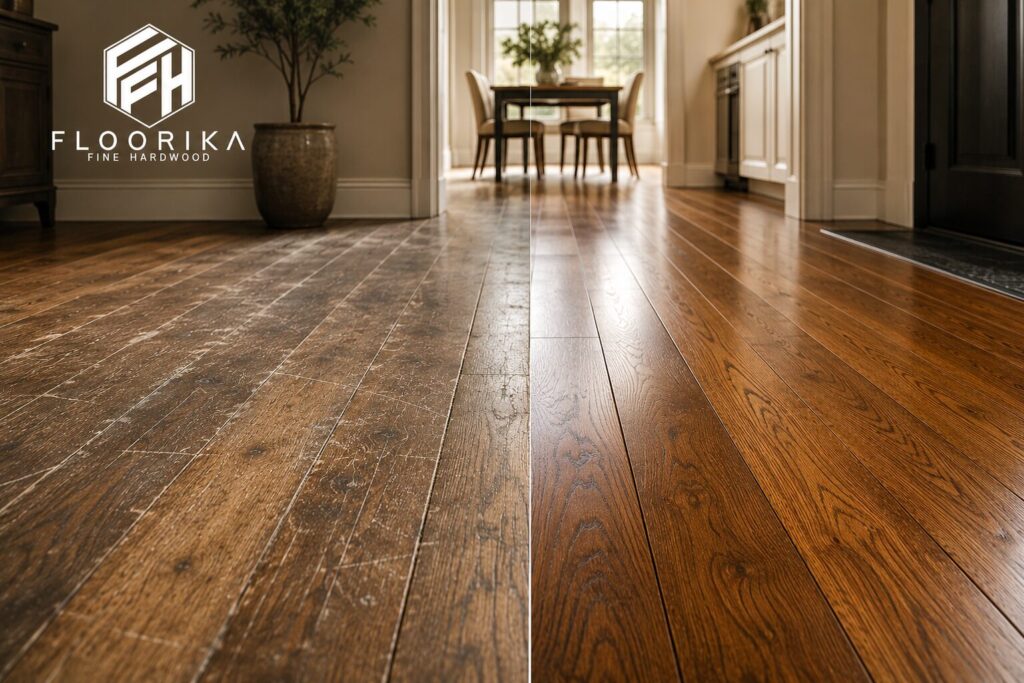
Take a stroll through your hallway and inspect high-traffic zones, especially in front of the kitchen sink and along the path from the front door to the couch. If you notice these areas appear lighter, flatter, or cloudier than sections of the floor covered by a rug or hidden behind a door, it’s a sign that the finish has worn away from foot traffic.
Catching this early is beneficial, as the floor often needs nothing more than a buff-and-recoat. This is the simplest and most cost-effective solution you could hope for!
2. Water No Longer Beads on the Surface
This quick test takes just ten seconds but reveals more about your floor’s condition than a simple visual inspection. Start by placing a small puddle of water on a worn area of the flooring and observe what happens.
If the water beads up and sits on the surface, the finish is still intact. However, if the water seeps in and darkens the wood within a minute, the finish has worn away, leaving the wood vulnerable to absorption. At that point, the floor is being damaged every single day it goes unaddressed.
3. When Your Floor’s Scratches Turn Tactile
Fine surface scratches are primarily cosmetic, but deeper scratches that penetrate the finish and reach the wood underneath are more serious. Drag a fingernail across a scratch; if it catches in a groove and you can see paler wood at the base, you’re past the finish.
A recoat won’t fix these. The floor needs sanding to clear the damage before anything is applied. And the longer those open grooves sit, the more grit and moisture work their way in, potentially causing further damage.
4. The Wood Is Turning Grey, or Worse, Black
When you notice grey boards, it indicates that the finish has deteriorated and the wood is beginning to oxidize, reacting to air and moisture. If you catch it at this grey stage, refinishing the floor can usually be done effectively.
However, if you see black patches on the wood, it’s more concerning. This indicates that water has penetrated deeply into the wood fibers, and those black stains often cannot be sanded out. In cases like this, it’s common to replace the affected boards rather than attempt to refinish them. Remember: grey means you should act soon; black means you need to act now.
5. Boards Are Cupping or Pulling Apart
When the edges of floorboards rise above their centers, or gaps form between them, it’s a clear sign that the wood is responding to moisture. Refinishing a floor in this state is not advisable; if you sand and seal over an active moisture issue, the problem will persist, and the floor will continue to shift under the new finish.
To address this, the first step is identifying the source of the moisture. In NYC buildings, steam-heat radiators, old plumbing, and moisture from the subfloor below are common culprits. Solve that first, let the boards settle, then refinish.
6. The Floor Looks Dull No Matter How Well You Clean It
Some floors can appear flat and lifeless even after a thorough cleaning. This dullness isn’t due to dirt; rather, it stems from a worn finish that has lost its clarity. Unfortunately, no cleaner can restore a depleted finish. The solution is to apply a recoat, which can make a big difference in the floor’s appearance.
7. The Finish Just Doesn’t Suit the Room Anymore
Not every refinishing project is driven by damage. Many clients choose to refinish their floors because the finish they chose fifteen years ago no longer aligns with their lifestyle or the room’s current aesthetic.
Today, there is a strong trend toward natural-looking finishes, particularly with European oak, medium tones, and matte or ultra-matte sheens. Many clients are moving away from grey floors and high-gloss finishes in favor of something warmer and more timeless. Refinishing for a change costs a fraction of replacing the entire floor and can completely transform the space.
Have Engineered Hardwood? Check the Wear Layer First
If you have engineered hardwood flooring, it’s essential to check the thickness of the wear layer before considering refinishing. The wear layer is the top layer of the flooring that can be sanded down to remove scratches and imperfections. Generally, a wear layer of 2 mm can accommodate a single, careful refinishing. If your floor has a wear layer of 4 mm or thicker, it can typically handle multiple refinishing jobs over its lifespan.
Before making any assumptions about refinishing, take the time to measure the wear layer. This measurement will dictate your options going forward and help you make the best decision for maintaining your floor.
Book a Refinishing Assessment at Floorika Fine Hardwood
If you’re noticing any of these signs in your NYC home and aren’t sure what your floor really needs, a professional assessment can save you from over- or under-treating the problem. At Floorika Fine Hardwood, we start with a complimentary walkthrough where we evaluate the condition of your floors, discuss your options, and outline a clear scope of work along with an estimated timeline.
Schedule your assessment with us, and we’ll advise you on whether your floors require a simple recoat, a complete refinish, or something more.