If you’re wondering why NYC homeowners are ditching gray floors in 2026. Here’s why:
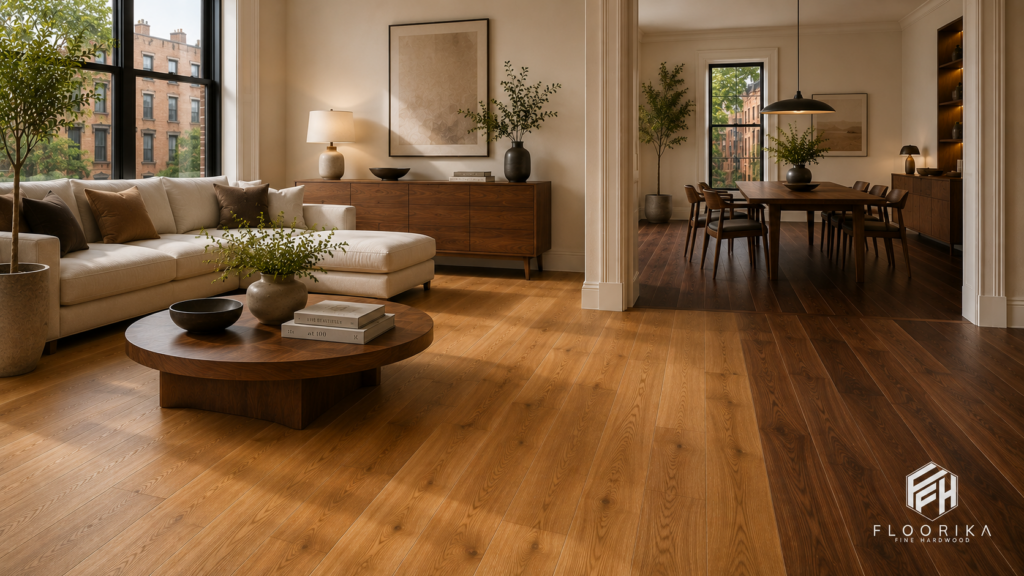
Gray flooring has been the go-to choice for nearly a decade, loved for its clean, sophisticated look. But in 2026, hardwood flooring trends are leaning toward warmer tones. Homeowners and designers are embracing honey oak, walnut, and other natural wood tones that bring softness, depth, and a more lived-in feeling to both modern and historic NYC homes.
Here’s a closer look at the warm wood tones hardwood 2026 trends that Brooklyn homeowners are choosing, and why this design movement shows no signs of slowing down.
What Honey Oak Tones Look Like in NYC Interiors
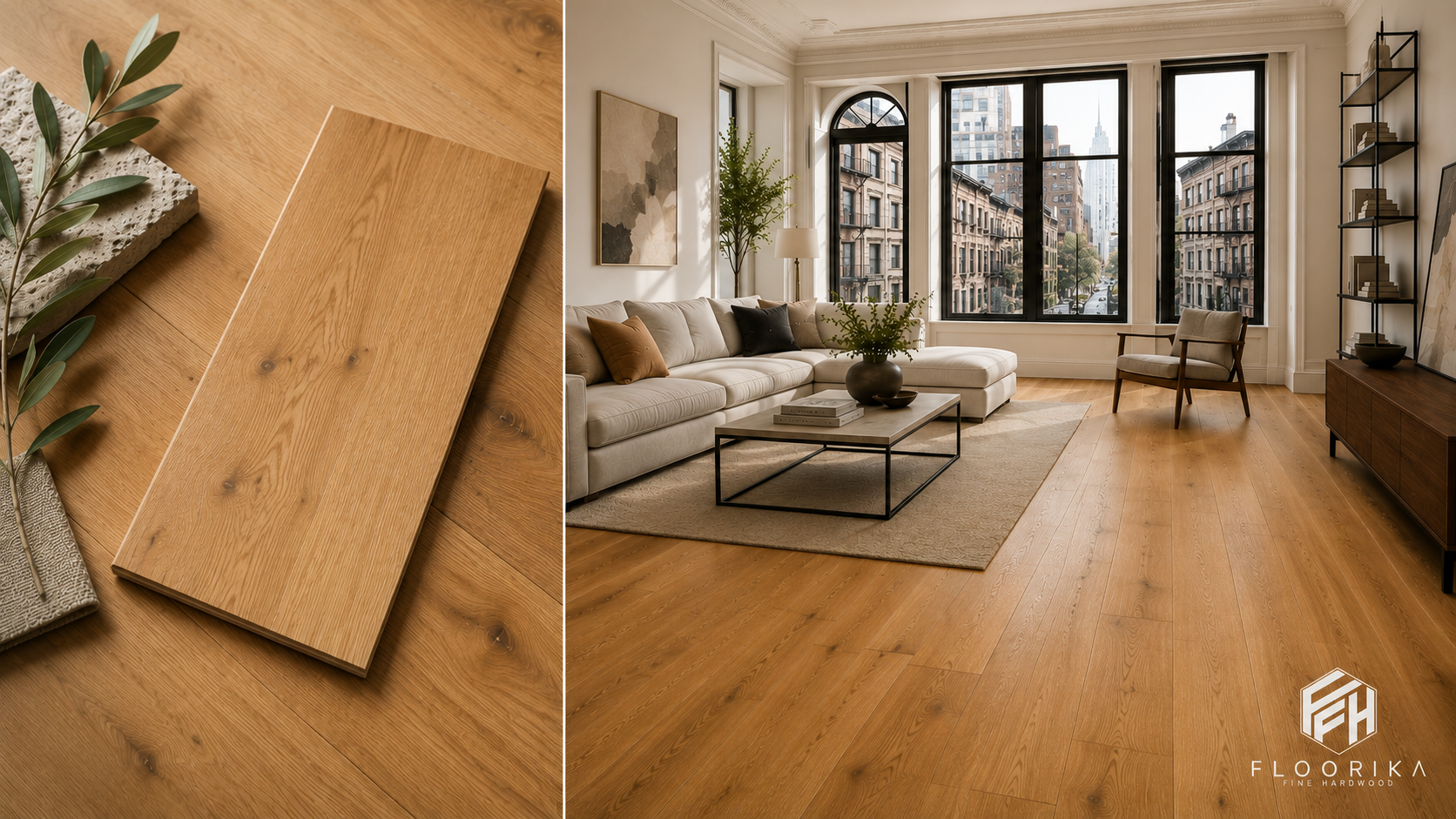
In an NYC interior, honey oak tones reflect warmth back into the room regardless of what the outside light is doing. In a prewar apartment on a gray November morning, it keeps the space from feeling cold or flat. In a Brooklyn brownstone with south-facing windows, it can look almost as if it’s lit from underneath.
That’s why honey oak works so well with the matte and ultra-matte finishes clients are asking for now. The tone feels natural, soft, and lived-in, while the finish keeps it from looking too glossy or dated.
Why Honey Oak Works Across Almost Any NYC Home and Building Type
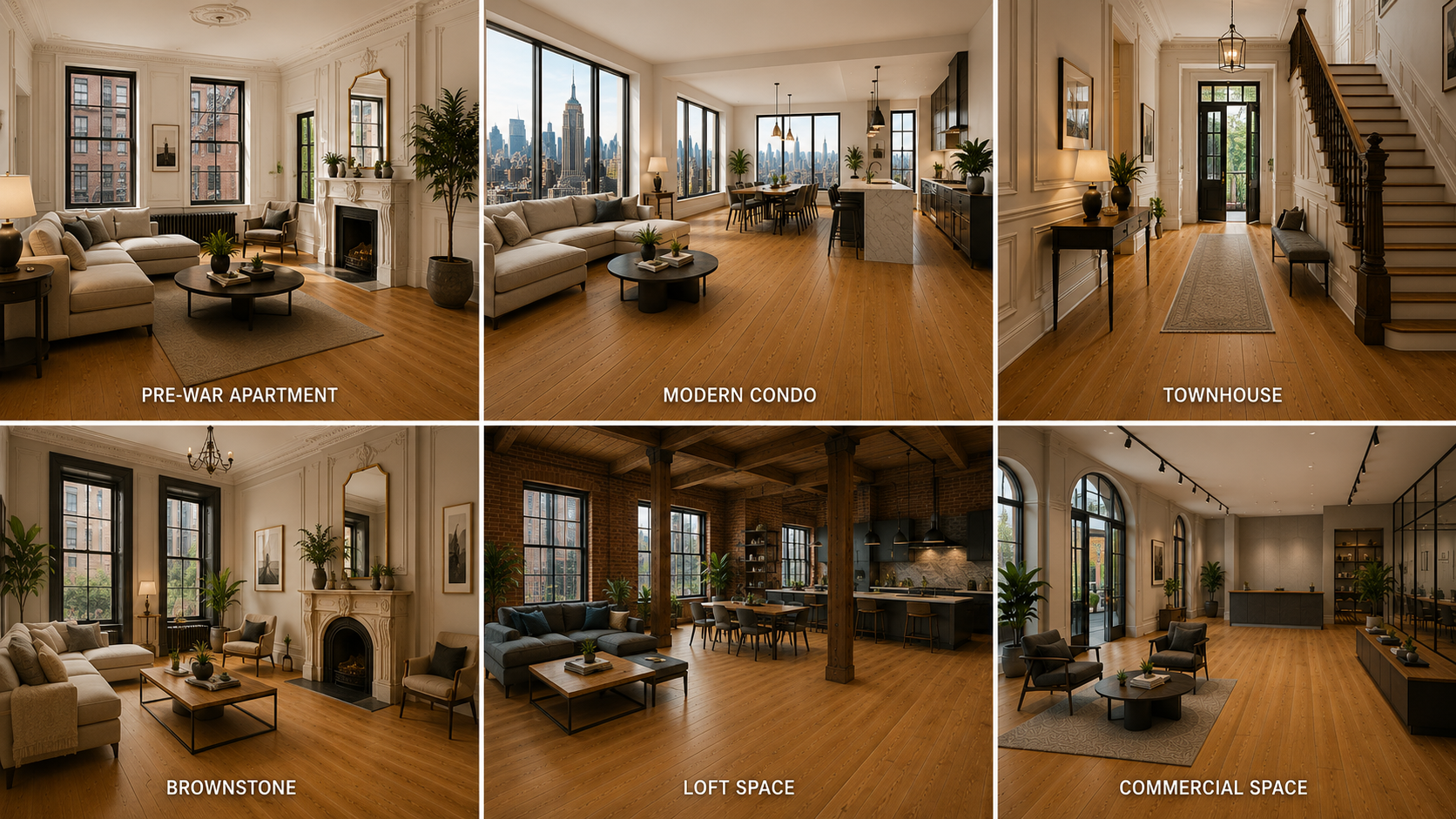
Honey oak works well across NYC homes because it brings warmth without overpowering the architecture. In brownstones and prewar co-ops, it feels connected to the building’s original woodwork and historic character. In newly developed condos, it softens cooler materials like concrete, steel, and glass, making the space feel more inviting. It’s also a smart choice for apartments with limited natural light, where gray floors can look flat but warm oak tones feel bright and grounded.
Honey oak pairs especially well with common NYC finishes like crisp white trim, exposed brick, or black metal fixtures, blending smoothly and creating a cohesive look. Whether you have painted moldings, classic fireplace mantels, or modern cabinetry, the golden undertones of honey oak complement both vivid and neutral palettes, helping homeowners achieve a harmonious look without changing other finishes throughout the space.
What Walnut Looks Like in NYC Interiors
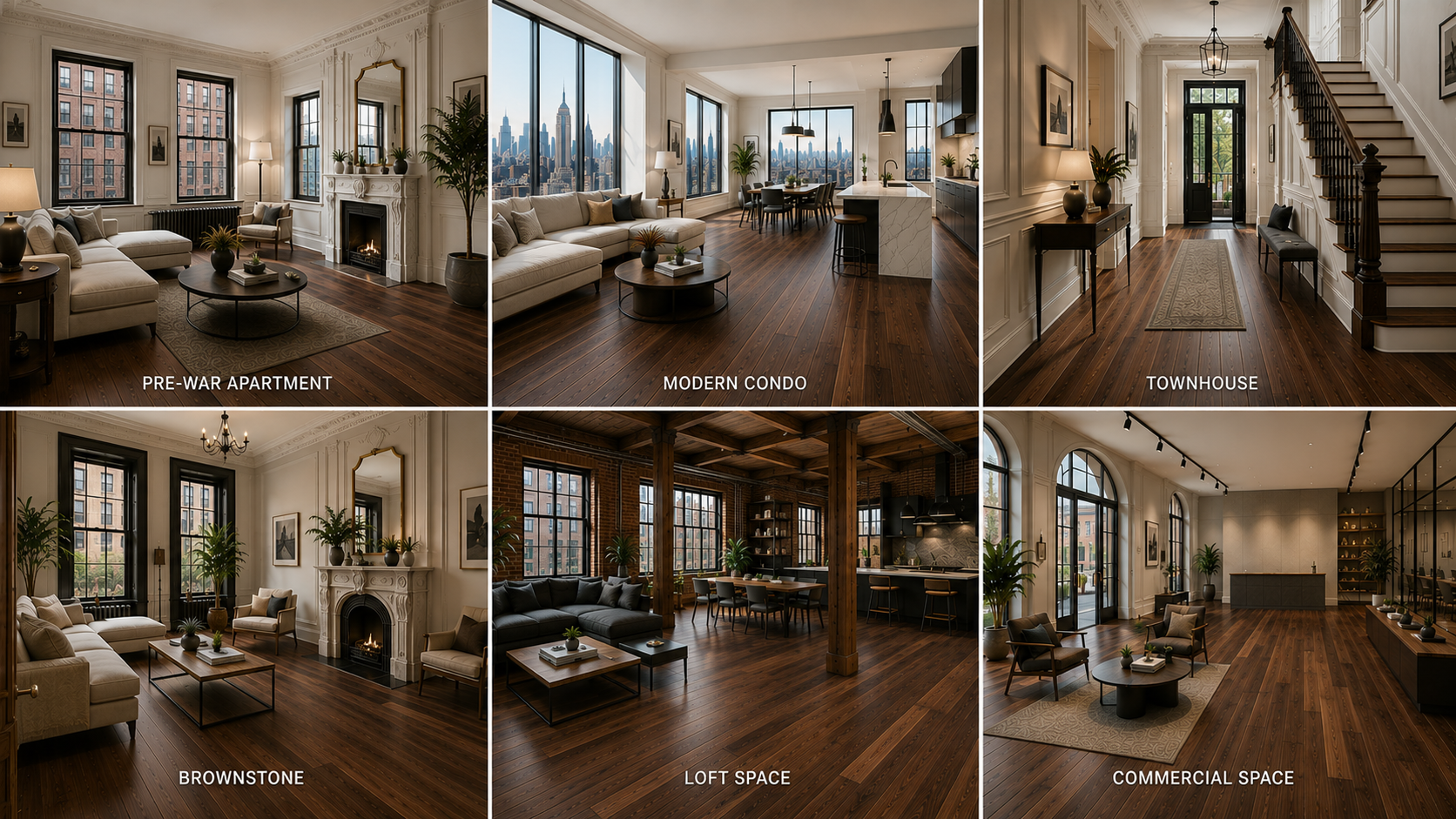
Walnut hardwood brings a richer, more dramatic look to NYC interiors, with deep chocolate tones, natural grain movement, and a high-end feel. It works best in spaces with enough natural light and visual breathing room, such as brownstones with tall windows or Manhattan apartments with open views.
Because walnut is softer than oak and can show scratches more easily, matte or natural finishes are often a better choice than glossy lacquers. For busy NYC homes, simple steps like using area rugs in high-traffic zones and attaching felt pads to furniture legs can help prevent scratches and keep walnut floors looking their best.
What Makes Walnut Different From Every Other Dark Floor
Walnut is dark, but it doesn’t feel flat. Its color comes from the wood itself, with natural shifts from caramel brown to deep chocolate. The grain is smoother than oak, which gives it a more refined, architectural look in wide planks. That’s why walnut feels high-end without looking overly stained or artificial.
Honey Oak vs. Walnut: How NYC Homeowners Are Choosing Between Them
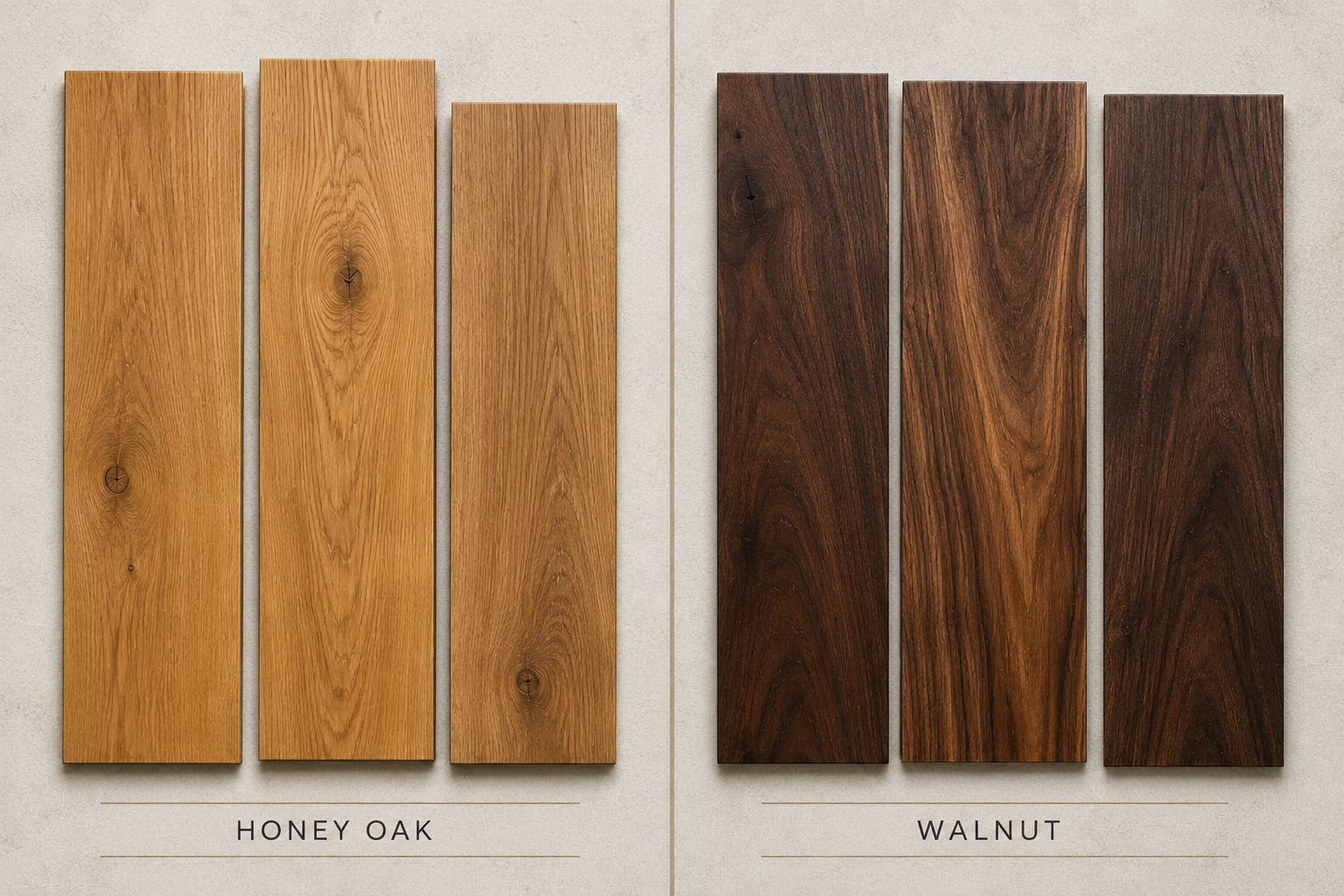
Homeowners who want the floor to support everything else in the room go with honey oak. It creates warmth and continuity without becoming the focal point. It works especially well in open-plan apartments, prewar spaces, and homes where the goal is to make everything feel lighter and more connected.
Homeowners who want the floor to lead go with walnut. It’s for those who want a stronger presence and more depth, especially in rooms with good natural light, pale walls, and simpler furniture.
For many NYC homeowners, honey oak flooring is used throughout the home, with walnut in one specific room, like home offices or dining areas, where the intimacy of a darker floor suits how the space is used. Because walnut is a softer hardwood, it is less frequently used in high-traffic areas.
Which One Suits Your Space, Light, and Building Type
Both work across brownstones, prewar apartments, and newly developed condos. The actual conditions inside the room matter more than the building type here.
| Key Comparison | Honey Oak | Walnut |
| Color and Vibe | Features pale golden to warm honey tones. It has a bold, prominent grain that provides a rustic, airy, and traditional feel. | Features deep chocolate to espresso hues. It boasts a smoother, more elegant grain pattern, giving a highly luxurious, modern, and moody vibe. |
| Durability | Harder and more dent-resistant. This is ideal for high-traffic areas or homes with pets. | It is prone to denting and scratching, so it is better suited for low-traffic or formal spaces. |
| Best For | Limited natural light, prewar architecture, open-plan layout, or a renovation where the homeowner wants something that won’t need revisiting for two decades. | Absorbs light, making it best for spacious, sunlit rooms. Its dark surface also shows dust, dirt, and scratches much more easily. |
| Cost and Availability | Highly available, more affordable, and easy to source. | More premium, less common, and usually more expensive. |
Choose Honey Oak If: You have a busy family, a high-traffic home, or need to brighten the space. It’s a highly versatile choice that makes the space feel warmer and easier to furnish.
Choose Walnut if: You want a striking, high-end, contemporary floor. It makes a stunning centerpiece for formal dining rooms, bedrooms, or modern homes with large windows and abundant natural light.
Solid or Engineered: Which One Carries Warm Tones Best
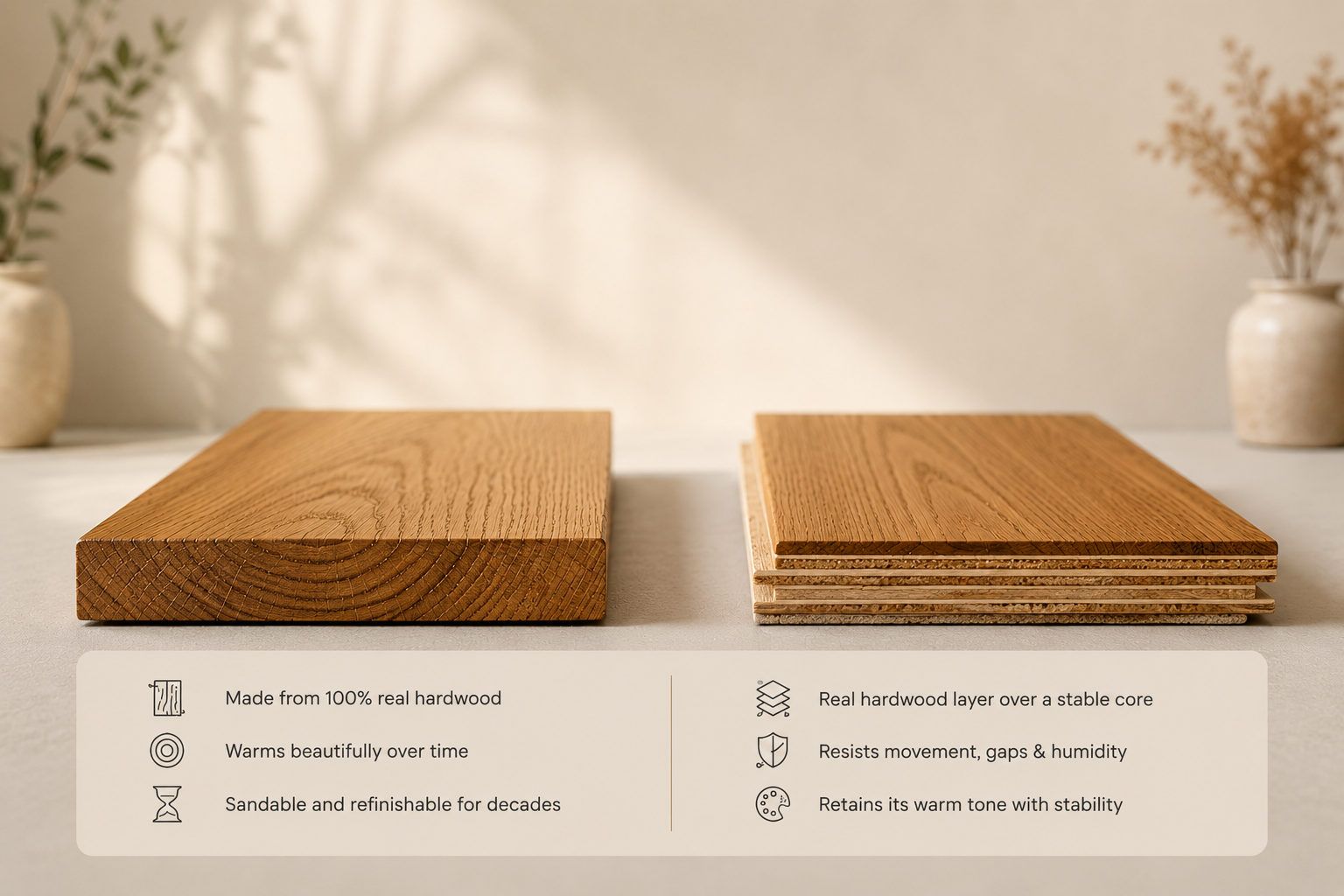
Both solid and engineered hardwood can beautifully carry warm tones, but engineered hardwood is often the more practical choice for NYC homes, especially in wide planks. Engineered hardwood is manufactured with multiple layers, making it less likely to expand or contract due to seasonal humidity and the building conditions common in New York apartments. This added stability helps prevent warping or gaps, which can be a concern with solid wood. Engineered options are also easier to install in high-rise buildings or over concrete subfloors, making them a smart and flexible solution for NYC living.
For honey oak, engineered European white oak is a strong option because it offers the warm, natural look homeowners want with more flexibility for city living. For walnut, solid hardwood can be beautiful when the space and subfloor allow it, but an on-site assessment is the best way to decide what will perform well in the long run.
See Honey Oak and Walnut in Person at Floorika Fine Hardwood
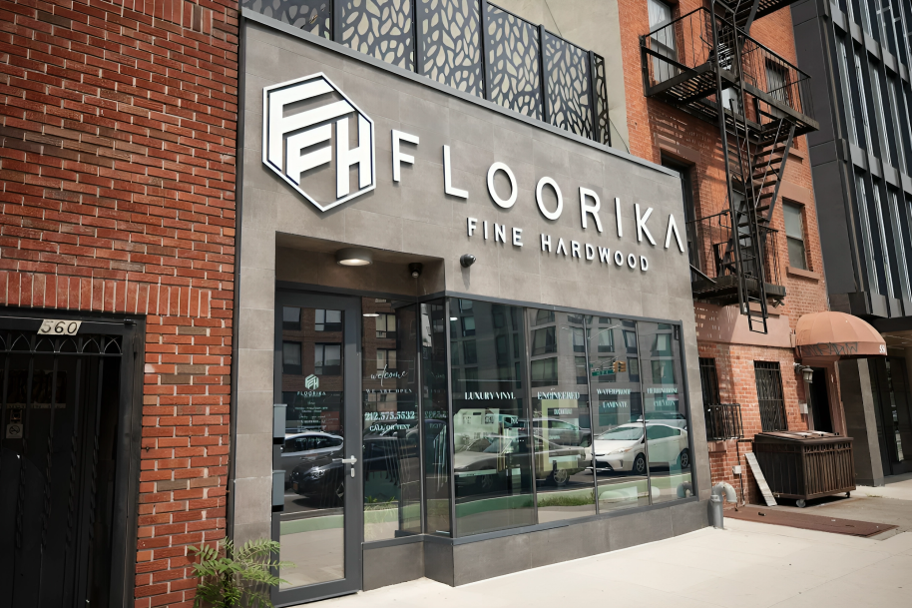
Warm wood tones look one way on a screen and completely different under real light. The subtle hues in honey oak and the depth of walnut only reveal themselves when you’re looking at the actual product at scale.
At Floorika Fine Hardwood in Brooklyn, you can explore engineered European white oak and solid hardwood options, including maple, cherry, hickory, and walnut by request, with unfinished and prefinished options available depending on the project. Featured in Luxe Interior + Design and presented at ICFF 2025, it’s where NYC homeowners and designers come to see premium flooring before making a decision.
Visit the showroom or book a private appointment and see both tones in person before committing to either. You can also request samples to take home to see how honey oak and walnut look under your own lighting and with your furnishings. This way, you can make a confident, personalized choice that fits your space.