Planning a new floor and wondering whether the calendar matters? It does, but the best installation window depends on more than the season. Wood responds to changes in temperature and humidity, which can affect how boards expand, contract, and settle after installation. Fall and spring often provide comfortable conditions, yet they are not the only suitable options. Indoor humidity, proper wood acclimation, and subfloor moisture levels have a greater impact on installation results. The right preparation can help a hardwood floor perform well in any season.
Does the Season Really Affect Hardwood Floors?
Wood is hygroscopic, meaning it constantly absorbs and releases moisture as the humidity around it changes. Damp air makes boards take on moisture and expand, while dry air makes them release it and shrink. That movement is the whole reason timing matters, since a floor installed during a humidity extreme can gap in winter or swell tight in summer. Managing moisture is key to protecting hardwood and keeping its dimensions stable. Proper moisture control helps prevent swelling, shrinking, gaps, and warping.
The Best Time of Year for Hardwood Flooring Installation
Fall and spring offer favorable conditions for wood floors. Mild temperatures and moderate humidity can help keep moisture levels more stable, reducing seasonal stress on the boards. Late September through November can be a practical installation window before indoor heating begins drying the air. The NWFA installation guidelines explain how regional and seasonal moisture changes affect wood flooring and why proper acclimation matters. Boards installed close to their long-term moisture average are more likely to stay flat, tight, and stable for years.
Important Note
Your floor does not care about the weather outside, only the air inside your home. Keep the indoor climate steady and any month becomes a good one.
Why Fall and Spring Are Ideal
Several factors come together in spring and fall, making these seasons a practical choice:
- Stable humidity: Steady moisture keeps planks from warping, cupping, or opening into gaps later
- Mild temperatures: Less strain on your HVAC, making a steady indoor climate simple to hold
- Faster acclimation: Conditions already sit near the ideal range, so the wood balances quickly
- Better availability: Installers have more flexible schedules outside the summer rush
Line those up and the floor gets its calmest possible start. Fall and spring remove the variables other seasons force you to manage.
Hardwood Flooring Installation Season by Season
Every season can work with the right preparation. Here is what to expect from each.
Spring
Spring is one of the strongest windows of the year. Humidity is rising after winter but still moderate, and mild temperatures make acclimation straightforward. The one thing to manage is the quick shift from dry winter air to damp spring air, which makes running your HVAC steadily worthwhile.
Best for: Most homes wanting easy, low-risk conditions.
Summer
Summer works, though it asks for the most humidity control.
- What happens: High outdoor humidity lifts indoor moisture, and wood swells
- The risk: Boards installed swollen can shrink and gap once winter heat dries them
- The fix: Run air conditioning to hold indoor moisture in the target range
- Verdict: Fine in a cooled home, riskier without steady AC
Fall
Fall is arguably the best of all. Cooler, drier air settles indoor humidity into a stable middle ground before the heating season starts, and moderate temperatures make for smooth acclimation. For most homes, this is the calmest time to lay a new floor.
The bottom line: If you can pick any month, aim for late September through November.
Winter
Winter is the trickiest, since indoor heating dries the air and shrinks wood. It is manageable, though only with active moisture control. Watch for:
- Dry, radiator-fed heat pulling moisture from new boards
- Gaps and surface cracking if the wood goes in too dry
- Slower scheduling, which can mean easier booking
Run a humidifier to hold humidity steady, and a winter floor turns out beautifully.
| Season | Indoor Humidity | Watch For | Verdict |
| Spring | Moderate, rising | Fast humidity swings | Very good |
| Summer | High | Swelling, later gaps | Good, with AC |
| Fall | Moderate and stable | Little to worry about | Ideal |
| Winter | Low, dry heat | Gaps, shrinkage, cracking | Good, with a humidifier |
Why Acclimation Matters More Than the Calendar
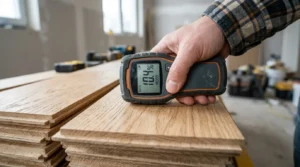
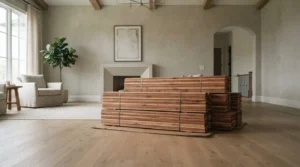
Here is the part many homeowners miss: the season matters less than letting the wood adjust to your home first. Acclimation means storing the flooring inside the room where it will live until it reaches a moisture balance with that space. A few things make it work:
- Give it time: Several days at minimum, sometimes two weeks or more
- Store it right: In the installation room, with the HVAC running normally
- Measure, do not guess: A pro checks the moisture of both the flooring and the subfloor
Skip this and even a perfect fall installation can move. Do it well and a winter floor can turn out flawless.
How Long Should Wood Acclimate?
There is no single number. A few days is a common minimum, and two weeks or more is not unusual. The wood is ready when its moisture balances with the room, which a pro confirms with a meter, not a calendar.
Humidity, Temperature, and Wood’s Comfort Zone
Wood floors are happiest in a specific range, and holding your home there is the real secret to a lasting floor. Industry guidance recommends keeping the interior at 60 to 80°F and 30 to 50 % relative humidity year-round. Stay inside that band and seasonal movement stays small. Drift outside it and the boards react:
- Too dry, below the range: Gaps between planks, shrinkage, and surface checking
- Too humid, above the range: Swelling, cupping, and tight, buckling boards
Keeping conditions steady after installation matters as much as the day the floor goes down.
How Different Floors Handle the Seasons
The material you choose changes how much the season matters. Some floors move a lot with humidity, others barely at all.
Solid Hardwood
Timeless and refinishable many times over, solid wood also moves the most with humidity. It performs best in a climate-controlled home where conditions stay steady.
Engineered European Oak
A layered core resists expansion and contraction, making engineered oak the most stable choice through seasonal swings. It suits apartments, upper floors, and homes with bigger temperature changes.
Luxury Vinyl and Waterproof Laminate
Both are highly stable and moisture-tolerant, with minimal seasonal movement, which makes them a practical pick for basements, kitchens, and rooms where humidity is harder to control.
Best For, at a Glance
- Solid hardwood: Steady, climate-controlled homes and classic character.
- Engineered oak: Apartments and spaces with big humidity swings.
- Vinyl or laminate: Basements, kitchens, and high-moisture rooms.
Can You Install Hardwood Flooring Year-Round?
Yes, and this is the reassuring part. With a climate-controlled home, a hardwood flooring installation can happen in any season, since heating and cooling let you hold the indoor environment steady whatever the weather does. The key is keeping indoor humidity in check before, during, and after the work.
Brooklyn Homes: A Quick Note
Local brownstones and apartments run dry radiator heat all winter and turn humid in summer. A humidifier in the cold months and AC in the warm ones keep your floor in its comfort zone all year.
Signs a Floor Was Installed at the Wrong Time
When timing and acclimation are ignored, the floor tends to show it within a season or two. Common signs include:
- Gaps between boards: Often from wood installed moist that later dried and shrank
- Cupping: Edges rising above the center, a sign of excess moisture
- Buckling: Boards lifting off the subfloor after absorbing too much moisture
- Cracking: Splits from wood laid too damp, then over-dried by heating
Persistent or severe versions of these point to a moisture or timing problem, which is exactly what proper acclimation prevents.
Is Some Gapping Normal?
Nearly every wood floor shows slight gaps between boards in dry winter, then closes back up as humidity rises. That gentle, seasonal movement is normal. Large, lasting gaps are the red flag.
Tips for a Smooth Installation Any Time of Year
Whatever season you pick, a few habits protect the result:
- Acclimate the wood: Let it adjust in the room for several days or more first
- Run your HVAC: Hold steady temperature and humidity before, during, and after
- Book ahead: Fall and spring fill up fast, so schedule early
- Match material to space: Engineered oak or vinyl for rooms with big humidity swings
- Time it with other work: Install after dusty jobs like drywall and painting
- Hold conditions long-term: Keep the room in the ideal range well after install
Follow these and the month on the calendar matters far less. Preparation, not timing, is what makes a floor last.
FAQs
What is the best month to install hardwood floors?
Late September through November is often ideal, since indoor humidity is stable and temperatures are moderate. Spring is a close second. Any month works, though, with a climate-controlled home and properly acclimated wood.
Can you install hardwood flooring in winter?
Yes. Winter installation is fine as long as a humidifier keeps indoor humidity in the recommended range. Dry heating air is the main risk, since it can shrink boards laid without moisture control.
How long does hardwood need to acclimate?
Usually several days, and sometimes two weeks or more, depending on the product and conditions. The wood is ready once its moisture content balances with the room, which pros measure rather than rush.
Does humidity really cause gaps in wood floors?
Yes. Low humidity dries and shrinks wood, opening gaps, while high humidity swells it and can cause cupping. Keeping your home at 30 to 50 percent relative humidity year-round keeps that movement minimal.
Is engineered or solid wood better for changing seasons?
Engineered wood is more stable through humidity swings thanks to its layered core, ideal for apartments and variable climates. Solid wood is equally beautiful and refinishes more often, with a little more seasonal movement.
Should flooring go in before or after other renovations?
Install hardwood after the dusty work like drywall and painting is finished, and before the final baseboards and trim. This protects the new floor and gives the cleanest result.
Ready When You Are
The best time to install hardwood flooring is when your home can maintain stable conditions and the wood has enough time to acclimate. Fall and spring often make that easier, but proper humidity control, careful acclimation, and the right material matter in every season. Get those details right, and a well-installed floor can keep its beauty for years.
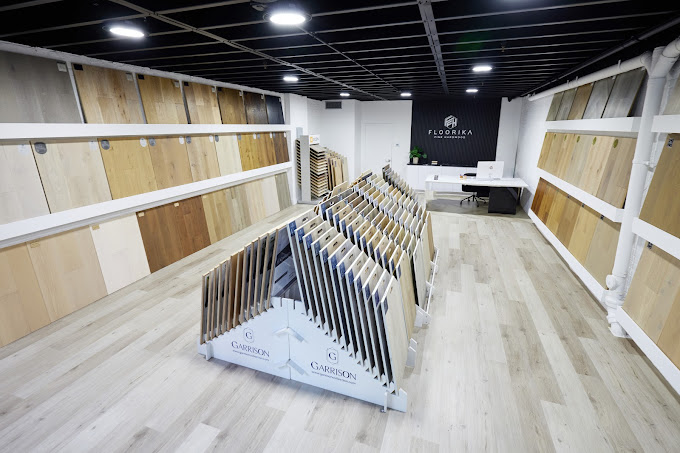
Floorika Fine Hardwood helps Brooklyn homeowners choose flooring that fits their space, lifestyle, and long-term needs. Wide-plank European oak, solid hardwood, luxury vinyl, and waterproof laminate are available alongside expert installation and straightforward guidance. Choose the right conditions, the right material, and the right team, and give your new floor a strong start in any season.