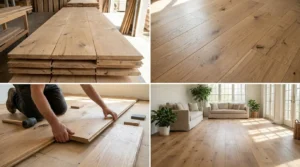
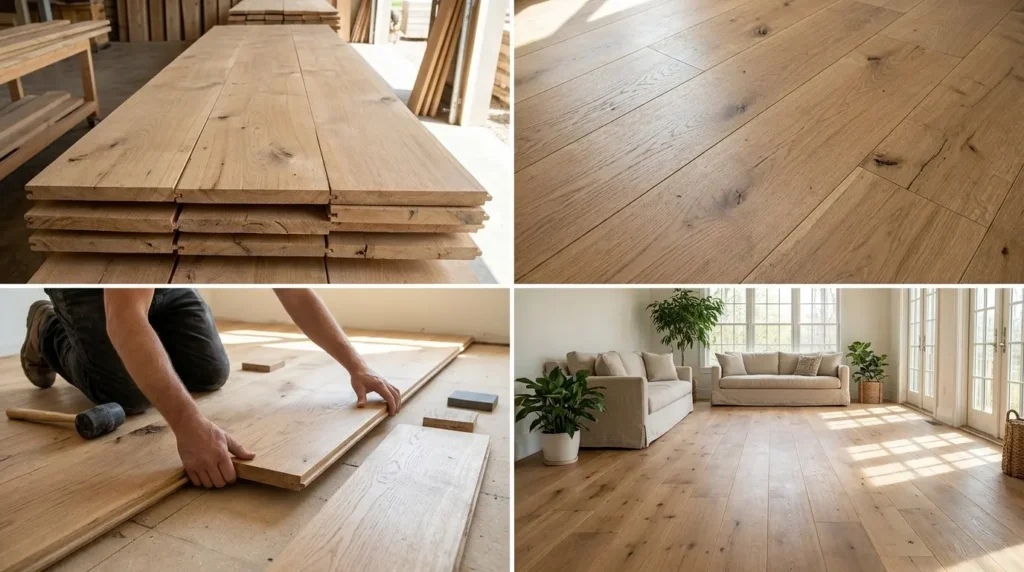
Walk into a freshly renovated Park Slope brownstone or a new Williamsburg condo, and the floor often draws your eye first. Long, wide boards in a soft natural oak tone make the room feel calmer and larger than its square footage suggests. That look has become one of the most requested finishes in Brooklyn renovations, and once you see it in person, the appeal is easy to understand.
Then the shopping starts, and labels such as engineered, French oak, ABCD grade, hardwax oil and 9-inch planks turn a simple choice into a confusing one. You want to know what you are paying for, why prices vary so widely between showrooms and if those wide boards will stay flat through dry radiator heat in January.
Put simply, Wide Plank European Oak Flooring is real oak from European forests cut into boards about 7 inches wide or more, most often built as engineered planks with a solid oak top layer over a stable multi-ply core. That combination gives Brooklyn homes the calm, high-end look of wide boards along with the stability that older buildings and dry winters demand.
Where European Oak Comes From
The story of wide plank European oak flooring starts in old, carefully managed forests across France and Central Europe. Two native species and slow growth give the wood its calm grain and warm color.
Two Native Oak Species
European oak comes from two closely related trees, English or pedunculate oak (Quercus robur) and sessile oak (Quercus petraea). Both grow across much of Europe, and mills often sell them together under one name because the timber looks and performs almost the same.
These species belong to the white oak group, which gives them closed pores, strong water resistance and the ability to take stains and oils evenly. American white oak (Quercus alba) is a close cousin rather than a twin, and the differences show up in color and grain once the boards are installed.
Forests of France and Central Europe
France holds the most famous oak forests, many of them managed for centuries for shipbuilding, wine barrels and fine joinery. In France’s managed oak forests, trees are felled after approximately 180 years, and that slow growth produces the tight, even rings prized in fine oak products.
Flooring-grade European oak also comes from several other regions:
- Germany and Austria, known for straight, even grain
- Poland and the Baltic states, a major source of wide, long boards
- Croatia’s Slavonia region, famous for large, straight trunks
- Ukraine and Romania, which supply many natural and rustic grades
Origin affects color and grain slightly, though grade and milling matter more for the final look. Reputable suppliers can usually tell buyers which region their boards come from.
A Short History of Wide Oak Floors
Wide wooden boards are far older than today’s design trend. Their path from European estates to Brooklyn condos explains why the look feels both classic and current.
- Medieval and Renaissance Europe: Castles and wealthy homes laid broad oak boards cut from massive old-growth trees, which gave grand halls a solid, lasting floor.
- 1684, Versailles: Oak parquet panels known as Parquet de Versailles replaced marble floors in the French palace and spread decorative oak flooring across European estates.
- 1600s and 1700s, Colonial America: Early American homes used wide pine and oak boards milled from abundant old forests, often 12 inches wide or more.
- Late 1800s to mid-1900s: Industrial milling and tongue-and-groove joints made narrow 2 1/4-inch oak strips the standard, including in many Brooklyn brownstones and pre-war apartments.
- 1940s onward: European manufacturers developed multi-layer engineered wood flooring, which later made wide oak boards stable enough for modern homes and concrete buildings.
- 2000s to today: Minimalist, Scandinavian and Japandi interiors revived wide planks, and engineered European oak became a leading choice for designers and renovators.
Today’s version blends that long history with engineering that old-growth floors never had.
How Wide Plank European Oak Floors Are Built
Most wide European oak sold today is engineered, though solid boards still exist. Construction decides stability, installation options and the number of times the floor can be renewed.
Engineered Construction
Engineered planks stack several layers, with real oak only on top. From the surface down, the board includes:
- Oak wear layer: 2 to 6 millimeters of European oak, the surface you see and walk on.
- Stable core: cross-laid birch plywood, multi-ply hardwood or a softwood middle layer that resists swelling and shrinking.
- Backing layer: a thin wood veneer that balances the board and keeps the plank flat.
Cross-laid layers pull against one another, which keeps wide boards flat when humidity changes. The thickness of the wear layer also sets the refinishing potential, which makes thicker tops a smart long-term choice.
Solid Wide Planks
Solid European oak boards come from a single piece of timber, usually 3/4 inch thick. Wide solid planks look beautiful but move more with seasonal humidity, and boards over 5 inches wide can cup or open gaps in dry, radiator-heated rooms.
Solid planks also need a wood subfloor for nail-down installation, which rules them out over the concrete slabs common in Brooklyn condos. These limits explain why most designers specify engineered boards once widths pass 6 or 7 inches.
Sawing Methods and Grain Patterns
The way a log is sawn changes the grain pattern on the finished board. European oak flooring usually comes in three cuts:
- Plain sawn: Cathedral arches and bold grain, the most common and affordable cut
- Rift sawn: Straight, linear grain with little figure, prized in modern rooms
- Quarter sawn: Straight grain with shimmering ray flecks, the most stable and most expensive cut
Many wide planks mix plain and rift grain for natural variation across the floor. Rift and quarter sawn boards also move less with humidity, which adds stability in wide formats.
Edge Profiles
Edge profile shapes the line between boards and changes the overall look of the floor. Micro-bevels add a soft shadow line that highlights plank width, while square edges create a smooth, seamless surface closer to site-finished floors. Deeper bevels give a rustic feel but collect more dust and crumbs, which matters in kitchens and homes with pets.
Common Widths and Lengths
The term “wide plank” usually starts at about 6 to 7 inches, and European oak often goes much wider. Typical sizes compare as follows:
| Size Range | Common Dimensions | Look and Feel |
| Standard | 3 to 5 inches wide | Classic, with more visible seams |
| Wide | 6 to 8 inches wide | Calm and open, the most popular range |
| Extra wide | 9 to 12 inches wide | Dramatic, estate-style rooms |
| Board length | Up to 7 feet or longer in premium lines | Fewer end joints for a cleaner floor |
Length matters as much as width, since frequent end joints break up the calm look wide planks are known for.
Wide planks are hard to judge from a 12-inch sample, because long boards show their beauty best across a full floor. Our Park Slope showroom offers private appointments, with Sunday visits on request, giving busy homeowners time to see full-length Wide Plank European Oak boards up close. Homeowners can compare widths and finishes without rushing, and they leave knowing which plank suits their rooms.
Grades: Clean or Full of Character?
Grade describes the knots, color variation and natural marks allowed in the boards. European mills commonly sort oak into four grades:
- Prime (often labeled A): Very few small knots and even color, which suits minimalist and modern rooms.
- Select (AB): Small knots and light variation, a balanced choice for transitional homes.
- Natural (ABC): Moderate knots, color shifts and occasional filled cracks that add warmth.
- Rustic or Character (ABCD): Large knots, filled cracks and strong variation for lofts, farmhouse styles and busy households.
Character grades usually cost less and hide scratches better, while prime boards cost more and show wear sooner. Grade names vary between mills, and checking a full box of boards gives a truer picture than one sample.
Finishes and Textures
Finish protects the oak and shapes its look as much as color does. European oak pairs especially well with natural, low-sheen surfaces.
Protective Finishes
- Hardwax oil: Soaks into the wood for a soft, natural matte look, and worn spots can be repaired without sanding the whole floor.
- UV-cured oil: Cured at the factory for a tougher surface while keeping an oiled appearance.
- Polyurethane or lacquer: Forms a protective film that resists spills and needs less frequent upkeep, though the floor feels slightly less natural underfoot.
Oil finishes suit homeowners who enjoy a natural look and a light maintenance routine, while lacquered boards suit busy households with kids and pets.
Textures and Color Treatments
Wire-brushing removes softer wood between the grain lines, leaving a textured surface that hides scratches and dents. Hand-scraped and saw-marked boards add an older, rustic character that suits lofts and farmhouse rooms.
European oak’s natural tannins also make the wood ideal for smoked or fumed finishes, where ammonia reacts with those tannins to deepen the color through the board. Whitewashed, bleached and raw-look finishes lighten the oak for Scandinavian and coastal interiors.
Prefinished vs Site-Finished Boards
European oak arrives either prefinished from the factory or unfinished for sanding and finishing on site.
Prefinished boards carry durable factory coatings, install faster and let homeowners use the room within a day or two, with no on-site fumes or sanding dust. Color stays consistent from box to box, though the beveled edges remain visible and the finish cannot seal the seams.
Unfinished boards get sanded flat after installation and finished in place, which seals the seams and allows custom stain matching with existing floors. The process takes several days and usually means staying out of the space, yet the result suits restorations and flush transitions in pre-war apartments.
Prefinished boards suit most new installations, while site finishing wins when new oak must blend with original floors.
Patterns Beyond Straight Planks
European oak is also the classic wood for patterned floors, and many Brooklyn homes already have historic examples underfoot.
Herringbone lays rectangular blocks at right angles to form a broken zigzag, a pattern found in many pre-war Brooklyn apartments. Wider and longer blocks give the classic look a more modern scale.
Chevron cuts the board ends at an angle, forming a continuous V that reads cleaner and more contemporary than herringbone. Versailles panels arrange oak into large squares with interlaced diagonals, the formal pattern born in French palace halls, and they suit grand parlors and dining rooms.
Many homes mix both approaches, with patterned oak in the entry or dining room and wide planks through the living spaces.
Patterned floors depend on precise layout, since a single off-angle row can throw off an entire room. Our installers lay herringbone, chevron and mosaic patterns in European oak with careful planning at doorways and borders. Homeowners get the detail they fell for in the showroom, and they avoid uneven lines that are hard to fix later.
Interior Styles That Suit Wide European Oak
Wide European oak adapts to more design styles than most floors, mainly through grade and finish choices.
- Modern and minimalist: Prime grade boards in a light natural tone with a matte finish keep rooms calm and clean.
- Scandinavian and Japandi: Whitewashed or raw-look oil finishes on select grade boards create a soft, airy floor.
- Transitional: Natural grade oak in a medium tone bridges classic moldings and modern furniture.
- Industrial loft: Rustic grade boards with wire-brushed or smoked finishes stand up to brick, steel and concrete.
- Traditional brownstone: Herringbone or Versailles panels in a warm brown stain suit formal parlors and dining rooms.
Choosing grade and finish first, then color, keeps the floor aligned with the style of the home.
How Much Does Wide Plank European Oak Flooring Cost?
The price of wide plank European oak flooring depends on width, length, grade, finish and wear layer thickness, along with installation in your building. Typical ranges look like this:
- Engineered wide plank, natural or rustic grade: about $6 to $10 per square foot for material
- Engineered wide plank, select or prime grade with longer boards: about $10 to $16 per square foot
- Extra-wide planks over 9 inches or specialty finishes: $15 per square foot and up
- Herringbone or chevron patterns: usually 20 to 30 percent more than straight planks
- Professional installation in New York City: roughly $4 to $10 per square foot, depending on subfloor and pattern
Co-op and condo buildings may add costs for sound underlayment, insurance certificates and reserved elevator time. Thicker wear layers raise the upfront price, though they allow more refinishing cycles over the life of the floor.
Wide Plank European Oak vs Other Popular Floors
Comparing European oak with the floors buyers most often consider shows where it leads and where alternatives make more sense.
European Oak vs American White Oak
- Color: European oak leans toward a soft golden or neutral tone, while American white oak can show more olive, gray or pink hints.
- Grain: European oak often shows a softer, more varied grain with more character, while American white oak tends to look straighter and more uniform.
- Wide boards: European mills commonly produce engineered planks 7 to 12 inches wide in long lengths, which makes extra-wide formats easier to find.
- Price: Prices overlap, though premium wide European boards usually cost more.
Verdict: European oak wins for wide, long, character-rich planks, while American white oak suits buyers who prefer a straighter grain or domestic sourcing.
Wide Plank vs Standard Strip
Wide plank pulls ahead when you want:
- fewer seams and a calmer, more open look
- a modern, Scandinavian or high-end transitional style
- long sightlines in open-plan apartments
Standard strip still makes sense when you need:
- a seamless match with original pre-war floors
- lower movement risk in solid hardwood
- a traditional, brownstone-classic look
Wide plank wins for most renovations, while narrow strip remains the right call for matching original floors.
Engineered vs Solid Wide Plank
Scoring the two constructions factor by factor gives a clear result:
- Stability: Engineered leads, since cross-laid cores resist cupping in wide formats.
- Installation options: Engineered leads, with glue-down, floating and nail-down methods over concrete or wood.
- Refinishing potential: Solid leads, with more wood above the tongue for repeated sanding.
- Radiant heat compatibility: Engineered leads by a wide margin.
- Price: Roughly even at similar quality levels.
Engineered construction wins four of five factors, which makes it the clear choice for wide European oak in most homes.
European Oak vs Luxury Vinyl Plank
Luxury vinyl plank copies the look of wide oak at a lower price and handles standing water better. Its printed surface cannot be refinished, feels harder and colder underfoot and rarely holds up to a close look at grain and texture.
European oak costs more upfront but can be renewed for decades and carries real value at resale, since buyers in Brooklyn’s older neighborhoods often expect real wood. Real oak wins for main living spaces, while vinyl suits basements, rentals and wet areas.
The Verdict
Across these matchups, engineered wide plank European oak flooring in a natural or select grade, with a wear layer of 3 millimeters or more, offers the best balance of beauty, stability and long-term value for most Brooklyn homes. Solid strip oak remains the choice for restoring original pre-war floors, and luxury vinyl fills in where water exposure is constant.
Is Wide Plank European Oak Right for Brooklyn Homes?
Brooklyn buildings put wide boards through conditions that suburban homes rarely face. Knowing them upfront prevents gaps, noise complaints and approval delays.
Steam radiators dry indoor air sharply in winter, while humid summers push moisture back into the wood. Oak floors perform best within a relative humidity range of 30 to 50%, and engineered wide planks hold their shape through those swings far better than solid boards. Before ordering, confirm these points with your building and installer:
- the subfloor type, since concrete slabs call for glue-down engineered planks
- co-op or condo rules on sound underlayment and acoustic ratings
- a humidifier plan for winter to protect wide boards
- floor height at doors, radiators and kitchen appliances
- delivery access, including elevator reservations and building insurance certificates
Pre-war apartments with original strip oak in other rooms may also need a transition plan where old and new floors meet. Planning these details early keeps the installation on schedule and the boards flat for decades.
Installation Methods for Wide European Oak
Installation method depends on the subfloor, the building and the board construction. Four methods cover nearly all wide European oak floors.
Glue-down: The planks bond directly to concrete or plywood with flooring adhesive, which gives the most solid feel underfoot and the best performance for wide boards. Most Brooklyn condos with concrete slabs use this method.
Floating: Click-lock planks rest on an underlayment without glue or fasteners, which suits sealed older floors and faster installs. Floating floors can sound slightly hollow and allow small movement in very wide boards.
Nail-down or staple-down: Fasteners secure the boards to a wood subfloor, a common approach in brownstones and row houses with joist framing.
Glue-assist: Adhesive combined with nails adds holding power for extra-wide planks over wood subfloors.
Boards wider than 7 inches generally perform best when glued, either fully or together with nails. Building sound requirements may also call for an acoustic underlayment beneath any of these methods.
Pros and Cons of Wide Plank European Oak
Wide European oak brings clear strengths and a few trade-offs to weigh before you buy.
Strengths:
- Calm, high-end look with fewer seams
- Real oak surface that can be sanded and refinished
- Strong stability in engineered form, even over concrete and radiant heat
- Wide range of grades, finishes and patterns
- Lasting appeal for buyers in Brooklyn’s older neighborhoods
Trade-offs:
- Higher price than strip oak, laminate or vinyl
- Sensitivity to standing water and very dry air
- Limited refinishing on thin wear layers
- Visible scratches on glossy, prime-grade boards
For most homeowners, the strengths outweigh the trade-offs in living rooms, bedrooms and open-plan spaces. Careful choices of grade, finish and wear layer reduce most of the drawbacks.
Care, Maintenance and Lifespan
Wide oak floors last longest with simple daily habits and steady indoor conditions.
Felt pads under furniture, mats at entries and rugs in high-traffic paths prevent most scratches and dents. Oiled floors benefit from a maintenance oil coat once the surface starts to look dry, while lacquered floors need a screen-and-recoat when the sheen wears down in busy areas. Closing blinds during peak afternoon sun also slows the natural ambering and fading that oak shows over time.
Lifespan depends mostly on the wear layer. Boards with a 2 to 3 millimeter top layer typically allow one full sanding, while 4 millimeter layers allow two or three. Wear layers of 6 millimeters can handle three or more sandings, giving a well-kept engineered floor a service life of 40 years or longer.
How to Judge Quality Before You Buy
Two wide oak floors can look identical in a photo yet perform very differently at home. Check these details before ordering:
- Wear layer of at least 3 millimeters for long-term refinishing
- Multi-ply birch or hardwood core instead of a cheaper fiberboard core
- Compliance with TSCA Title VI formaldehyde emission standards for engineered wood sold in the United States
- Mix of long board lengths, with few short pieces in the box
- Consistent grading across boxes, not just in the showroom sample
- Clear finish warranty and written care instructions
- FSC or PEFC certification for responsibly sourced oak
Asking for these specifications in writing makes price comparisons between suppliers fair. Lower prices often trace back to thinner wear layers or weaker cores.
Is European Oak a Sustainable Choice?
European oak comes from some of the world’s most closely managed forests, where harvesting follows long replanting cycles. Across the continent, the European forest area increased by 9% over the past 30 years, even as timber harvests continued.
Wood also stores carbon for as long as the floor stays in use, since roughly half of dry wood weight is carbon. Engineered boards stretch that benefit further by placing a thin layer of premium oak over faster-growing core woods. Buyers can look for FSC or PEFC certification to confirm responsible sourcing.
Can Wide Plank European Oak Go Over Radiant Heat?
Yes, engineered European oak works well over radiant heating because its layered core resists the drying effect of warm floors. Most manufacturers limit the floor surface temperature to around 80 to 85 degrees Fahrenheit and recommend glue-down installation. Solid wide planks make a riskier match and are usually not recommended.
Does Wide Plank European Oak Scratch Easily?
Oak is a hard, durable species, though any wood floor can scratch from grit, pet claws and dragged furniture. Wire-brushed textures, matte finishes and natural or rustic grades hide marks far better than smooth, glossy prime boards. Choosing those surfaces from the start keeps daily wear far less noticeable.
Choosing Wide Plank European Oak With Confidence
Wide plank European oak blends centuries of European craftsmanship with modern engineering, delivering wide, calm boards that suit Brooklyn brownstones and new condos alike. Engineered construction keeps those boards stable through radiator heat and humid summers, while grade, finish and pattern let homeowners shape the final look. Choosing the right wear layer, grade and installation method protects that investment for decades. The last step is pairing the right boards with guidance and installation that fit your building.
That guidance is part of the experience with Floorika Fine Hardwood. The team helps homeowners match grade, width and finish to their rooms, and its installers handle glue-down, floating and patterned European oak floors for homes across New York City. Years later, the same team can sand, repair and refinish the floor to restore its original glow, and homeowners know exactly who to call when that day comes. Book a visit with Floorika Fine Hardwood and find the European oak plank that fits your home.
FAQs
Can Wide Plank European Oak Be Installed in a Kitchen?
Yes, engineered European oak works in kitchens when spills get wiped up quickly and rugs protect the sink area. Lacquered or UV-oiled finishes add extra spill resistance compared with hardwax oil in busy cooking spaces.
Does European Oak Need to Acclimate Before Installation?
Yes, most manufacturers recommend letting engineered oak rest in the room for 48 to 72 hours before installation. Running heat or air conditioning at normal living conditions during that time helps the boards match the home’s humidity.
Can Engineered European Oak Go in a Basement?
Yes, engineered European oak can go below grade over a dry concrete slab with a proper moisture barrier. Testing slab moisture first is essential, and basements with past flooding or constant dampness suit vinyl or tile better.
Can Wide Plank European Oak Be Used on Stairs?
Yes, matching stair treads and nosings are available in European oak, which keeps stairs and floors consistent. Solid oak treads usually work best on stairs, since engineered planks need specially made nosing pieces for durable edges.
Is European Oak Harder Than American Oak?
No, European oak and American white oak are very similar in hardness, both rating around 1,350 on the Janka scale. European oak is slightly harder than American red oak, and finish choice affects scratch resistance more than species.