One of the most common questions we hear in our Brooklyn showroom is:
“Should I choose engineered or solid hardwood?”
The answer is usually simpler than people think.
In most New York renovations, the building itself determines the right flooring long before personal preference enters the conversation. Whether you’re renovating a Manhattan condo, a Brooklyn brownstone, or a new development apartment, factors such as the subfloor, building requirements, humidity conditions, and plank width often make the decision for you.
The biggest misconception is that engineered hardwood is somehow a lower-quality alternative to solid hardwood. Twenty years ago that may have been a common perception. Today, many of the highest-end flooring collections in the world are engineered hardwood products.
The question is not which product is “better.” The question is which product is better for your building.
Understanding the Difference
Both solid and engineered hardwood are real wood floors.
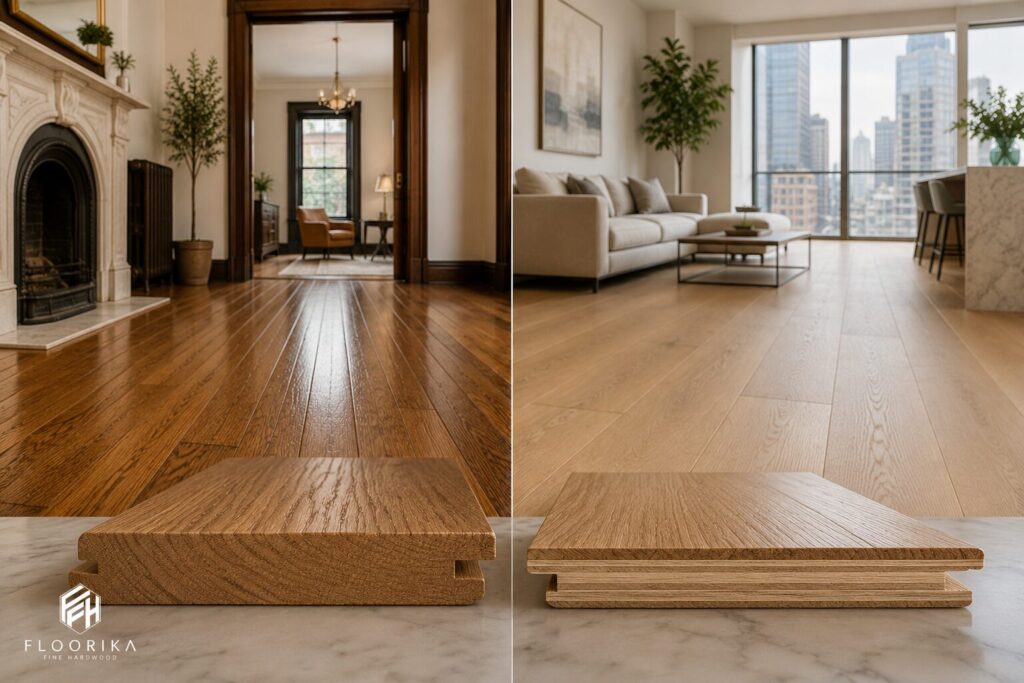
Solid hardwood is milled from a single piece of wood, typically 3/4″ thick. It has been used for generations and can be refinished numerous times throughout its lifespan.
Engineered hardwood features a real hardwood wear layer bonded to a multi-layer core. The cross-layered construction improves dimensional stability and reduces the natural expansion and contraction associated with solid wood.
Visually, the two can be virtually identical once installed. The differences become important when considering installation conditions and long-term performance.
Why Engineered Hardwood Dominates Modern NYC Renovations
Most New York City projects today involve conditions that favor engineered construction.
Concrete Subfloors
Many condos, apartments, and newer developments are built on concrete slabs.
Because solid hardwood is traditionally nailed to a wood subfloor, installation over concrete can be challenging and often requires additional layers of plywood. Engineered hardwood can be glued directly to concrete or installed using approved floating systems, making it significantly more practical for many urban renovations.
Building Requirements and Sound Control
Many co-op and condo boards require flooring systems that meet specific acoustic standards.
Engineered flooring often integrates more easily with sound-control underlayments and approved installation systems, which is one reason it has become the preferred choice for many apartment renovations throughout Manhattan and Brooklyn.
Seasonal Movement
New York experiences dramatic humidity swings throughout the year.
Winter heating systems create extremely dry indoor conditions, while summers can be hot and humid. These changes cause natural wood movement.
While all wood floors move to some degree, engineered construction is generally more stable under these conditions, helping minimize seasonal gaps and expansion.
Wide Plank Flooring
One of the biggest shifts in flooring design over the past decade has been the demand for wider planks.
Many homeowners and designers now prefer 8″, 9″, 10″, and even wider formats to create a more modern and luxurious appearance.
As plank widths increase, stability becomes increasingly important. This is one of the reasons engineered hardwood has become the preferred specification for many premium European flooring manufacturers.
The Wear Layer Matters More Than Most People Realize
When evaluating engineered hardwood, one specification matters more than almost anything else: wear layer thickness.
Not all engineered floors are created equal.
Lower-quality products may have wear layers too thin to support future refinishing, while premium engineered flooring often features wear layers of 4mm or more.
A high-quality engineered floor with a substantial wear layer can often be refinished multiple times and provide decades of performance.
For homeowners comparing products, wear layer thickness is frequently a more important consideration than simply choosing between engineered and solid construction.
Where Solid Hardwood Still Makes Sense
Although engineered flooring is often the preferred solution in modern NYC renovations, solid hardwood remains an excellent option in certain situations.
Brownstone Restorations
Many Brooklyn brownstones and historic properties have traditional wood subfloors that are ideal for nail-down solid hardwood installation.
For restoration projects where maintaining traditional construction methods is important, solid hardwood may be the most appropriate choice.
Long-Term Refinishing Potential
Solid hardwood offers the greatest refinishing lifespan.
Because the material is solid wood throughout its thickness, it can typically be sanded and refinished more times than any engineered alternative.
For homeowners planning to remain in a property for generations, this may be an important consideration.
Which Is Better?
In our experience, most modern New York renovations benefit from premium engineered hardwood flooring.
The realities of concrete construction, co-op regulations, acoustic requirements, humidity fluctuations, radiant heat systems, and wider plank designs have made engineered hardwood the preferred solution for many luxury residential projects.
That does not mean solid hardwood is obsolete.
Solid hardwood remains an excellent choice for certain restoration projects and traditional installations over wood subfloors.
The key is understanding that the decision should be based on the building, not outdated assumptions about which product is more premium.
Today, some of the most sophisticated and expensive flooring collections available are engineered hardwood products.
The best floor is the one that performs properly in your specific space.
Choosing the Right Floor for Your Project
Every New York renovation presents unique challenges.
At Floorika, we help homeowners, designers, and architects evaluate flooring options based on building conditions, design goals, installation requirements, and long-term performance expectations.
Whether your project calls for engineered hardwood, solid hardwood, chevron, herringbone, or wide-plank European oak, selecting the right construction is just as important as selecting the right color.
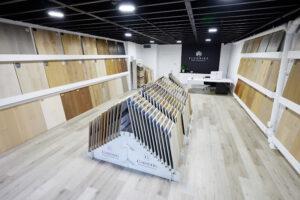
Visit our Brooklyn showroom to explore both options and discuss your project with our team.