Hardwood floors can look flawless on installation day and still fail within a single season. Edges start to lift, thin gaps open along the seams, and boards that felt solid underfoot begin to creak. Most of this traces back to one skipped step before the first plank went down. Proper hardwood flooring acclimation gives the wood time to adjust to the moisture inside your home before the boards are fastened in place. Skip that step, and the wood keeps shifting after the job is finished, which is exactly when the visible damage starts.
Here is the part most people miss. Wood reacts to moisture no matter how long ago the tree was cut, and the USDA Forest Products Laboratory confirms that “wood, like many natural materials, is hygroscopic“. Every board takes in moisture when the air is damp and releases it when the air is dry. Give it no time to settle, and it finishes that change after installation, when there is no space left at the walls to take up the movement. Cupping, gaps, buckling, cracks, and a voided warranty all begin right there.
So which problem shows up first, and can you still fix it? The eight below fall into a clear order. Boards installed too dry swell and cause the first three, while wood installed too wet shrinks and causes the next three. The last two can hit you either way.
-
Cupping Across the Width of the Board
Cupping is easy to notice when your wood floor starts feeling uneven underfoot. The long edges of the boards rise while the center dips, leaving a visible curve across the surface. Moisture usually causes this change, because the underside of the wood absorbs more than the sealed top. Check the subfloor or crawl space for dampness, since moisture from below can bend the boards out of shape.
Watch For:
Moisture trapped under cupped boards can grow mold you never see. Look at what is happening beneath the floor before you blame the wood on top.
Fix: Find and stop the moisture first, then let the boards dry back to a normal level before any sanding.
-
Crowning Down the Center of the Plank
Crowning is the opposite of cupping, and you feel a slight hump instead of a dip as you cross the room. This time the center of each board sits higher than the edges. The problem usually starts when a cupped floor is sanded flat before the wood has dried out, which leaves the center standing high once the boards finish drying. Those raised centers take the weight of every step and wear down faster than the rest of the floor.
Fix: Correct the humidity first, wait for the readings to settle, and sand only if the boards are still thick enough.
-
Buckling and Tenting That Lift the Floor
You cannot miss buckling, and it is the most serious problem on this list. The boards swell with so much force that they pull away from the subfloor and lift right off the ground.
Buckling
Whole rows rise into a ridge once the swelling wood runs out of room at the walls. Flooding, a burst pipe, or a sudden jump in humidity usually sets it off.
Tenting
Two boards next to each other push together and peak into an upside-down V. The same pressure causes both, and the repair is the same.
Heads Up:
Turn off any water leak the moment the boards lift, because the water keeps feeding the swelling. The moisture check done before installation is the one thing that prevents it.
If ignored: The lifting spreads to more rows, and each damaged row has to come out and be replaced.
-
Gaps Opening Between the Boards
Gaps are the first problem on the shrinking side, and the easiest to spot from across the room. Boards installed too wet lose moisture to the dry home, shrink in width, and leave thin lines between the planks. Wondering whether yours are a real problem? The timing gives it away.
| Gap type | When it appears | What it means |
| Seasonal gaps | Dry winter heat, closing by summer | Normal movement in any wood floor |
| Permanent gaps | Open all year | Wood dried far below the room and never recovered |
Seasonal gaps close on their own once the humid months return. Any gap that stays open all year means the wood was never matched to the room before installation.
Fix: Keep the indoor humidity steady for seasonal gaps, and fill or re-lay the ones that stay open.
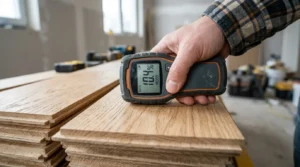
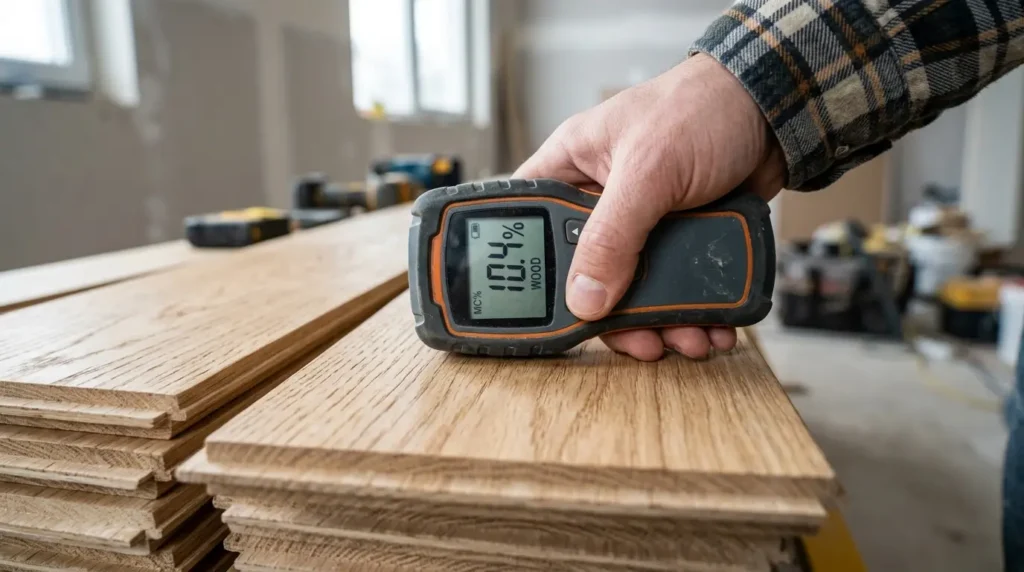
Notice the pattern? Every problem up to here comes back to one check nobody did. A quick reading with a moisture meter on the wood and subfloor shows exactly how much moisture is present before the first board is cut. That reading is where every floor at Floorika Fine Hardwood starts, right in the Brooklyn showroom. You walk away with wood that already matches your home instead of a floor that fights it all winter.
-
Cracks and Surface Checking in the Grain
Wood that dries too fast splits along the grain and leaves thin cracks across the surface, which the trade calls checking. Run a finger over them and you will feel the lines catch, since each one collects dirt and breaks the smooth look of the finish. The damage comes in two depths:
- Surface checking: Shallow hairline cracks that often sand out once the wood is stable.
- Deep cracks: Splits that run through the board and need full replacement.
Hard and exotic woods crack first, because they lose moisture unevenly. One winter of dry heat from the radiators is often enough to open them up.
Fix: Sand out the shallow cracks once the readings hold, and replace any board cracked all the way through.
-
Loose Boards and Squeaks Underfoot
That squeak under your feet almost always has the same cause. Shrinking wood loses its grip on the nails and staples, each board pulls away from the next, and the planks move a little every time you step on them. The movement rubs the wood against the fasteners, and the squeak slowly spreads across the floor. A new floor should stay quiet, which makes noise in the first year a clear sign the moisture was never matched.
Fix: Refasten the loose area and keep the humidity steady to stop the seasonal movement.
-
Finish and Seam Separation
Look closely at the seams and you can watch the finish give way, whichever direction the wood moved. A hard finish cannot stretch as much as the moving boards underneath it, which cracks the coat along the seams and chips the edges. The protective layer you paid for wears out years earlier than it should.
Did You Know:
Refinishing a floor that is still moving fails within a year, because it cracks along the same seams again. The wood has to hold a steady reading before a refinish is worth the money.
Fix: Refinish only after the boards hold a steady moisture reading over several checks.
-
Voided Warranties and a Shorter Lifespan
Here is the problem you never see coming, and the one that hurts the wallet most. Manufacturers treat acclimation as the installer’s job, which means one rushed installation can cancel the warranty on the whole floor. Two records decide how a claim goes:
- Moisture log: Readings from installation day that prove the work was done right.
- Maker guidelines: The written install rules that spell out the acclimation the warranty needs.
Years of swelling and shrinking also wear down the boards and seams, and a floor meant to last decades reaches the end of its life early.
If ignored: The repair bill and the early replacement both fall on you instead of the manufacturer.
Quick Check: Signs your floor was never acclimated:
✓ Gaps or cupping that showed up in the first year
✓ The whole floor affected, not just one damp corner
✓ Problems that follow the seasons, worse in deep winter or peak summer
✓ Nothing spilled or leaked to explain the moisture
How the Seasons Expose an Unacclimated Floor
Your floor might look fine for months, then fall apart the moment the weather changes. Brooklyn winters turn very dry under radiator and forced-air heat, and a floor laid too wet dries out fast until its gaps and cracks spread. Summers in New York run humid, which pushes moisture back into a too-dry floor until the edges start to cup again. The National Wood Flooring Association recommends keeping a home at “60° to 80° and 30 % to 50 % relative humidity”, which keeps the yearly change small. Even steady humidity cannot fix a floor that started out of range.
Why Some Floors Take It Harder Than Others
How bad the damage gets depends on the type of board you chose. Oregon State University Extension notes that “solid wood products shrink and swell as they lose or gain moisture”, and a wider, thicker board moves more than a narrow strip. Solid wide-plank oak shows every problem on this list the clearest. Engineered boards handle it better thanks to their layered core, though skipped acclimation still opens their seams and lifts their edges.
Worth Knowing:
At around 70°F and 40 % humidity, hardwood settles near 7.7 % moisture content. Move the air far outside that range and the boards swell or shrink to match.
Can the Damage Be Reversed
Whether you can undo the damage depends on how far the wood moved and how early you caught it.
Problems That Settle With Time
Mild cupping, seasonal gaps, and light squeaks often ease once you fix the humidity and the boards return to a normal level. Timing is everything here. A floor left in the wrong conditions for months hardens into its bent shape and loses the chance to recover.
Damage That Needs New Boards
Buckling, tenting, and cracks that go through the grain rarely recover, and neither does a floor sanded while still cupped. These problems need new wood or a full redo, and fixing them costs far more than hardwood flooring acclimation ever would. Catch a failing floor early and you often save half the boards. Wait another season and you usually lose them all.If your floor already shows gaps or cupping, Floorika Fine Hardwood can check the moisture and identify which boards are worth saving. From there, our team can handle the repair or refinishing needed to restore the floor.
Stopping It Before the First Board Goes Down
Want to skip this whole list? Proper hardwood flooring acclimation prevents all eight problems, and it comes down to one habit before installation starts. The wood has to reach the same moisture level as the room and the subfloor, checked with a meter instead of counted in days. Our full guide to the tools, steps, and timing is here in how to acclimate hardwood flooring the right way. The short version is simple:
- Close up the room and keep normal living conditions, around 60 to 80°F and 30 to 50 % humidity, before delivery.
- Test both the wood and the subfloor, then wait until the readings are within 2 to 4 % of each other.
- Store the boards in the room where they will go, with air able to reach every board.
Get those three right and the wood is ready, whatever the calendar says.
Pro Tip:
Ask your installer for the moisture readings in writing before the first board goes down. That one page protects your warranty if a problem ever comes up.
Frequently Asked Questions
How soon do acclimation problems appear after installation?
Most appear within the first few weeks to a few months, usually with the first big change in humidity. A floor laid in dry winter air often starts cupping once the humid months arrive.
Can cupped hardwood flooring flatten on its own?
Mild cupping often flattens once the extra moisture is gone and the wood returns to a normal level over several weeks. Severe or long-standing cupping sets for good and then needs sanding or replacement.
Does an unacclimated floor always need replacing?
Not always, since gaps and mild cupping can recover once the conditions are fixed. Buckling, deep cracks, and any floor sanded while cupped usually leave replacement as the only option.
Can gaps in hardwood flooring be fixed without replacing the boards?
Seasonal gaps often close on their own when indoor humidity goes back to normal. Permanent gaps can be filled or the floor re-laid, though wide year-round gaps sometimes need new boards.
Does a warranty cover acclimation damage?
Manufacturer warranties usually leave it out, treating the damage as an installation error rather than a product fault. Home insurance rarely helps either, unless a separate covered event like a burst pipe caused the moisture.
Protecting Your Floor From Day One
A floor that lasts is a floor that was prepared. Give the wood the days it needs to match your home, and the whole list above never starts. Rush it, and you pay the difference in repairs for years, often on damage that cannot be fully undone.
Quality hardwood flooring starts before the first plank goes down. Give the wood the right conditions, check its moisture level, and you give the floor a better chance to stay stable long after installation day.
At Floorika Fine Hardwood, hardwood flooring acclimation is part of that preparation. Boards are kept in our climate-controlled Brooklyn showroom, then checked for moisture on site before installation begins. You can see the oak in person at our 4th Avenue showroom and talk through your flooring plans before making the final choice.
- Visit the showroom or call 212.575.5532 to start planning your hardwood floor.
The floor you live on every day deserves the same care that goes into choosing it.