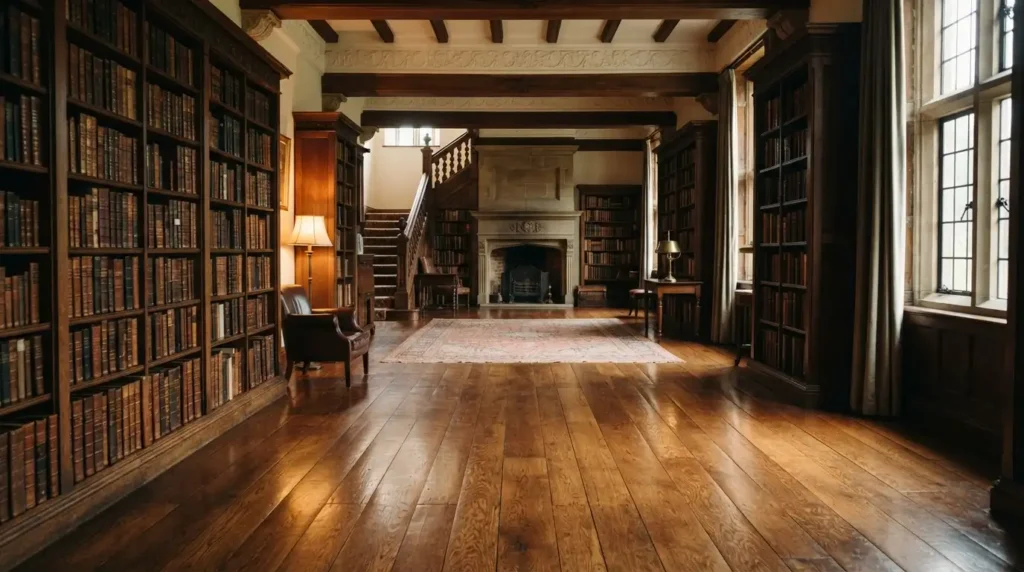
Old hardwood floors have something new flooring cannot easily reproduce: character.
Years of foot traffic can deepen the color, soften the appearance of the wood, and leave behind marks that are part of the floor’s history. But older flooring also requires more caution when it comes to cleaning. You may not know exactly which finish was used, whether the floor has been refinished before, or how much wear the protective surface has experienced.
That is why how to clean old hardwood floors is not simply a matter of choosing a stronger cleaner.
The safest approach starts with identifying the floor’s condition and finish, removing loose dirt without abrasion, using as little moisture as the flooring allows, and avoiding products that can interfere with the existing finish. The National Wood Flooring Association (NWFA) specifically advises homeowners to follow the flooring or finish manufacturer’s recommendations and notes that natural oil and wax finishes require additional precautions.
If you have an older floor in a Brooklyn brownstone, prewar apartment, or another historic home, the goal should be to remove dirt without unnecessarily disturbing the wood or finish that has survived for years.
For broader routine maintenance, start with Floorika’s complete guide to how to clean hardwood floors.
Are Old Hardwood Floors Different From New Hardwood Floors?
They can be.
The age of the wood itself is not necessarily the main issue. What matters more is the flooring’s current condition, its finish, previous maintenance, and whether the surface has already experienced wear, moisture exposure, refinishing, or other alterations.
An older floor may have:
- A traditional wax finish
- An oil finish
- A varnish or other older coating
- A polyurethane finish added during a later refinishing project
- Areas where the finish has worn away
- Previous repairs or replacement boards
- Accumulated wax or cleaning-product residue
That makes identifying the finish particularly important.
The NWFA recommends consulting a wood flooring professional when the flooring or finish manufacturer is unknown and advises using finish-specific care for oil and wax floors.
Historic properties deserve an additional layer of caution. The National Park Service recommends using the gentlest appropriate treatment when working with historic materials and preserving distinctive finishes and features whenever possible.
In other words, an old floor should not automatically be treated as a floor that needs to be stripped, scrubbed, or aggressively restored.
Before You Clean an Old Hardwood Floor, Identify the Finish
This is the step many cleaning guides skip.
Before experimenting with a homemade solution or an unfamiliar product, determine what is actually protecting the wood.
If you know the flooring manufacturer or the company that previously refinished the floor, check its maintenance instructions first.
If you do not know the finish, avoid assuming that a cleaning method recommended for a modern polyurethane floor will work equally well on an older waxed or oil-finished floor.
The NWFA states that when the manufacturer is unknown, a wood flooring professional should be able to identify the finish and recommend an appropriate cleaning product.
Wax Finishes
Waxed floors require different care from many modern no-wax finishes.
The NWFA specifically advises against water-based cleaners on waxed floors because they can cause water spots. It also notes that rebuffing an existing wax finish can revitalize many dull waxed floors, with new wax sometimes required periodically.
So if you suspect your old floor has a wax finish, do not start by pouring water or general-purpose hardwood cleaner over it.
Oil Finishes
Oil-finished floors also need finish-specific maintenance.
According to the NWFA, many natural oil finishes have particular maintenance routines involving compatible oils or soaps, and different oil finishes can have different maintenance programs. Traditional wood floor cleaners may damage an oil finish.
Varnish, Shellac, or Other Older Finishes
Older homes may contain floors with finishes that differ from today’s common factory-applied coatings.
If the finish is unknown, experimentation is not the best way to identify it. A flooring professional can evaluate the surface before you introduce a cleaner that could alter its appearance.
For historic properties, this conservative approach is especially appropriate because preservation guidance emphasizes retaining significant existing materials and using the least damaging treatment necessary.
Polyurethane Finishes
Many hardwood floors have been refinished with polyurethane or another modern protective coating.
These floors can have different cleaning instructions from waxed or oil-finished floors. Even here, however, excessive cleaner or moisture is not a good maintenance strategy.
The NWFA warns that non-recommended cleaning products can affect the appearance of a finish and may create adhesion problems when the floor is eventually recoated.
How to Clean Old Hardwood Floors Safely
Once you understand the floor’s condition and finish, the cleaning process becomes much more straightforward.
1. Remove Loose Dirt First
Start dry.
Sweep or dust mop the floor to remove grit, dust, hair, and other loose particles before introducing any cleaning solution.
The NWFA recommends frequent dry sweeping or dust mopping because particles can become ground into the finish and contribute to surface damage. It also recommends using a hard-surface vacuum setting and turning off the beater bar or rotating brush when applicable.
This is particularly useful with older floors because unnecessary abrasion can make an already worn finish look worse.
2. Inspect the Floor
Look for areas that need more than routine cleaning.
Check for:
- Deep scratches
- Peeling or flaking finish
- Black or darkened areas
- Cupped boards
- Raised boards
- Gaps
- Loose boards
- Water stains
- Bare-looking sections
- Heavy wax buildup
Do not assume all of these are dirt.
A dark area may be staining or moisture-related discoloration. A dull surface may indicate finish wear rather than accumulated grime. Raised boards may indicate moisture-related movement.
Cleaning cannot correct every flooring problem.
3. Use a Compatible Cleaner
Choose a product specifically recommended for your floor’s finish.
This is more important than whether a product is marketed as “natural,” “powerful,” or “deep cleaning.”
The NWFA advises using cleaners recommended by the flooring or finish manufacturer and warns that excessive use of wood-floor cleaners can damage the floor.
4. Keep Moisture Under Control
If your floor’s maintenance instructions allow damp mopping, use a slightly moistened, well-wrung mop rather than saturating the surface.
The NWFA recommends minimizing the amount of moisture left on the floor and advises wiping spills immediately to prevent damage from standing liquid.
Some manufacturers are stricter. For example, Bruce instructs owners of its hardwood floors not to use water or steam and instead recommends a spray-and-wipe cleaning system for compatible no-wax hardwood floors.
This is why there is no responsible one-size-fits-all recipe for cleaning every old hardwood floor.
5. Work in Small Areas
Apply your approved cleaning method to a manageable section rather than wetting the entire room.
This gives you better control over the amount of product being used and makes it easier to notice whether the finish reacts differently from what you expected.
6. Remove Excess Moisture
Do not leave puddles or visibly wet areas behind.
If too much cleaner has been applied, remove the excess according to the product’s instructions.
7. Let the Floor Dry
Give the floor adequate time to dry before replacing rugs or returning furniture to an area that remains damp.
The objective is simple: clean the surface without giving moisture unnecessary time to enter joints, worn areas, or damaged sections.
How to Clean Old Hardwood Floors That Are Very Dirty
Very dirty floors can tempt homeowners to reach for stronger chemicals, abrasive pads, or large amounts of water.
That is usually where problems begin.
Start with the least aggressive approach that can reasonably remove the soil.
First, remove loose dirt. Then use a finish-compatible cleaning method. If residue remains, do not automatically increase the concentration of the cleaner or scrub harder.
Old buildup can come from years of wax, polish, cleaning products, or other substances rather than ordinary household dirt.
If you are dealing with sticky residue or old wax, Floorika already has a more focused guide on how to safely remove sticky residue and wax from hardwood floors.
That is a better place to start than treating every dirty-looking floor as though it needs aggressive scrubbing.
Can You Use Water on Old Hardwood Floors?
There is no universal yes or no because the answer depends on the floor and its finish.
The important distinction is between controlled moisture and excessive moisture.
The NWFA’s current technical guidance recommends a slightly moistened, well-wrung mop for regular damp mopping in its general care guidance. At the same time, it emphasizes following the flooring or finish manufacturer’s instructions, and it gives specific restrictions for waxed and oil-finished floors.
Some manufacturers take a more restrictive approach. Bruce, for example, says not to use water on its hardwood floors and recommends a spray-and-wipe system instead.
So when cleaning an old hardwood floor with an unknown finish, avoid assuming that water is harmless simply because the amount appears small.
Can You Use Vinegar on Old Hardwood Floors?
Vinegar is often recommended online as a homemade hardwood-floor cleaner, but that does not make it appropriate for every floor.
Bruce specifically advises against acidic substances such as vinegar on its hardwood floors.
The bigger issue with an old floor is that you may not know how its existing finish will respond to a particular cleaning solution.
If you are considering vinegar because the floor looks dull or has accumulated residue, identify the finish and use a compatible product instead.
For a deeper explanation of the vinegar question, see Floorika’s article on whether vinegar or steam mops are appropriate for hardwood floors.
Can You Steam Clean Old Hardwood Floors?
Steam cleaning is not a good default for older hardwood.
The NWFA advises against steam cleaners on wood flooring, while major flooring manufacturers can also prohibit steam cleaning in their care instructions.
Older flooring can be particularly difficult to evaluate because the finish may be unknown or partially worn.
For a dedicated explanation of the issue, see Floorika’s guide to the dos and don’ts of steam cleaning hardwood floors.
What Is the Safest Way to Clean a 100-Year-Old Hardwood Floor?
Age alone does not tell you what treatment the floor needs.
A 100-year-old floor that has been carefully maintained and refinished several times can have very different requirements from another floor of the same age with an original or deteriorated finish.
For genuinely historic flooring, preservation should be the starting point.
The National Park Service’s preservation standards recommend retaining distinctive historic materials and finishes and using the gentlest treatment appropriate to the situation.
That means you should be cautious about:
- Aggressive sanding
- Strong solvents
- Abrasive scrubbing
- Excessive water
- Unidentified stripping products
- Applying new wax or finish without understanding what is already present
If the floor has architectural or historic significance, consider getting an assessment before undertaking a major treatment.
How to Clean Old Hardwood Floors Without Removing the Finish
The safest strategy is to avoid treating the finish as an obstacle that needs to be removed.
Instead:
- Remove loose dirt with a dry method.
- Identify the finish if possible.
- Use a cleaner approved for that finish.
- Use minimal moisture where the manufacturer’s instructions permit it.
- Avoid abrasive pads and aggressive scrubbing.
- Stop if the surface changes unexpectedly.
- Have a professional assess persistent discoloration, finish failure, or structural damage.
This approach aligns with the NWFA’s emphasis on manufacturer-approved cleaners and finish-specific maintenance.
It also fits the broader preservation principle of using the gentlest effective treatment on historic materials.
Old Hardwood Floor Cleaning: What Is Safe and What Is Risky?
| Cleaning Approach | Suitable for Every Old Hardwood Floor? | Main Concern | Better Approach |
|---|---|---|---|
| Dry dust mopping | No universal guarantee, but commonly recommended | Abrasive dirt can remain if not removed | Use a soft, non-abrasive dust mop regularly |
| Hard-surface vacuuming | Generally useful when compatible with the floor | Rotating brushes can scratch finishes | Use the hard-floor setting and disable the beater bar |
| Slightly damp mopping | Not universal | Excess moisture | Only use when permitted and keep the mop well wrung |
| Water-based cleaner | No | May be unsuitable for certain finishes, especially wax | Follow finish-specific instructions |
| Vinegar solution | No | Acidic cleaners may damage some finishes | Use a manufacturer-approved hardwood cleaner |
| Steam mop | Generally not recommended | Heat and moisture can damage wood flooring and finishes | Use the approved dry or controlled-moisture method |
| Waxing | Not automatically appropriate | Can create buildup or alter the existing finish | Determine whether the floor is designed for wax maintenance |
| Abrasive scrubbing | No | Can wear through the finish | Start with the gentlest cleaning method |
| Sanding | Not a cleaning method | Removes material from the floor | Consider only when restoration is actually required |
The table reflects guidance from the NWFA and manufacturer care instructions. Because older floors can have unknown finishes, the manufacturer’s instructions or professional finish identification should take priority over a generic cleaning recipe.
What If the Floor Looks Dull After Cleaning?
Do not assume that more cleaning will bring back the shine.
A dull appearance can have several causes. It may be surface residue, but it can also indicate finish wear, scratches, abrasion, or a coating that has reached the end of its useful life.
The NWFA states that when a wood floor loses its luster, it may be time for a maintenance coat. It also explains that scratches confined to the finish can sometimes be addressed with a maintenance coat, while deeper scratches can require sanding and refinishing.
Floorika has already covered this distinction in My Hardwood Floors Look Dull: Causes and Restoration Tips.
That is worth reading before trying increasingly strong cleaners on a floor that is actually showing finish wear.
What If Old Hardwood Floors Have Scratches?
Cleaning will not remove scratches that extend into the wood.
The NWFA explains that many scratches affect the finish rather than the wood itself, while deeper scratches can require sanding and refinishing.
Before attempting a DIY repair, consider how deep the damage actually is.
A surface mark may need only maintenance. A deep scratch, dent, stained board, or damaged section may require a more involved repair.
Floorika’s existing guide on how to protect hardwood floors from scratches and damage covers prevention, while its refinishing resources address more extensive wear.
When Does an Old Hardwood Floor Need Refinishing Instead of Cleaning?
This is where homeowners often confuse maintenance with restoration.
Cleaning removes contaminants from the surface.
Refinishing addresses a worn or damaged finish and, when necessary, the wood beneath it through sanding and finishing.
You may want to consider professional assessment when you see:
- Widespread scratches
- A finish that is worn through
- Persistent discoloration that cleaning does not remove
- Deep stains
- Areas of exposed wood
- Significant dents
- Previous finish failure
- Water-related damage
- Uneven appearance that cannot be corrected through normal maintenance
The NWFA explains that sanding and refinishing can address scratches that extend into the wood and that professional refinishers generally remove a relatively small amount of material when making repairs.
If you’re at that stage, Floorika’s article on what to expect during hardwood floor refinishing can help you understand the process before deciding what comes next.
How to Maintain Old Hardwood Floors After Cleaning
The easiest way to reduce difficult cleaning later is consistent maintenance.
The NWFA recommends frequent dry sweeping or dust mopping, appropriate hard-surface vacuuming, prompt spill cleanup, and regular damp mopping when appropriate for the floor.
A practical routine looks like this:
Every day or as needed
Remove visible dirt and clean spills promptly.
Several times a week in busy areas
Sweep, dust mop, or vacuum using an appropriate hard-floor setting.
Periodically
Use the cleaning method and product recommended for your flooring and finish.
When the appearance changes
Determine whether the issue is dirt, residue, finish wear, scratches, or actual wood damage.
That last step matters.
A floor does not necessarily need a stronger cleaning product simply because it looks different than it did five years ago.
Common Mistakes When Cleaning Older Hardwood Floors
Assuming Old Wood Needs More Water
It does not.
Older wood is not automatically more tolerant of moisture.
Using a Homemade Cleaner Without Checking the Finish
“Natural” does not automatically mean “safe for every finish.”
Scrubbing Away Stains
Aggressive scrubbing can remove finish along with the material you are trying to clean.
Applying Wax Without Identifying the Existing Finish
Wax maintenance makes sense for some floors, but not every hardwood floor is designed for it.
Using Steam Because the Floor Is Hard to Clean
Steam adds heat and moisture. It is not a universal deep-cleaning solution for wood flooring.
Sanding Before Determining Whether Sanding Is Necessary
Sanding is restoration work, not routine cleaning.
Ignoring Changes in the Boards
Cupping, crowning, buckling, or unusual gaps can indicate a flooring problem rather than a dirty floor.
If you notice these symptoms, Floorika’s guide to identifying and fixing cupping, crowning, and buckling in hardwood floors is a useful next step.
Frequently Asked Questions
How often should old hardwood floors be cleaned?
There is no single schedule for every older floor. Dry cleaning can be performed frequently to remove dirt and grit, while damp cleaning should follow the flooring or finish manufacturer’s instructions. The NWFA gives regular damp mopping as part of its general maintenance guidance while emphasizing finish-specific instructions.
What is the best cleaner for old hardwood floors?
There is no universally best cleaner. The right product depends on the floor’s finish. The NWFA recommends using cleaners specified by the flooring or finish manufacturer.
Can I use vinegar to clean old hardwood floors?
Do not assume vinegar is safe. Some manufacturers specifically advise against acidic substances such as vinegar on hardwood floors.
Can I mop an old hardwood floor?
It depends on the finish and manufacturer’s instructions. Where damp mopping is permitted, use minimal moisture and a well-wrung mop. Some manufacturers recommend a spray-and-wipe method instead.
How do I clean a very dirty old wood floor?
Start with dry removal of dirt and grit, then use a finish-compatible cleaning method. Avoid jumping directly to abrasive scrubbing, large amounts of water, or strong chemicals.
How can I tell if my old hardwood floor is waxed?
An old floor’s finish is not always obvious from appearance alone. If you are uncertain, avoid experimenting with cleaners and have the finish identified by a qualified flooring professional.
Can you restore old hardwood floors without replacing them?
Often, yes, depending on the floor’s condition, construction, remaining material, and extent of damage. Sanding and refinishing can restore many worn floors, while severely damaged boards may require repair or replacement.
Should you clean or refinish an old hardwood floor?
Clean it when the problem is surface dirt or compatible residue. Consider professional assessment when the finish is worn, the wood is deeply scratched or stained, or the floor has significant damage that routine cleaning cannot address.
The Best Way to Care for an Old Hardwood Floor Is to Know What You Have
The most important lesson in how to clean old hardwood floors is that age alone does not determine the correct cleaning method.
The finish matters.
The condition matters.
Previous treatments matter.
And the amount of moisture you introduce matters.
Start gently. Remove dry dirt before wet cleaning. Use only products appropriate for the existing finish. Keep moisture controlled when damp cleaning is permitted, and do not use steam or aggressive DIY solutions simply because the floor looks difficult to clean.
For historic flooring, the case for caution is even stronger. The National Park Service recommends preserving significant existing materials and using the gentlest treatment appropriate to the situation.
And if cleaning reveals that the problem is actually a worn finish, deep scratches, damaged boards, or water-related deterioration, that is no longer a routine cleaning question.
Restore the Character of Your Hardwood Floors With Floorika Fine Hardwood
An older hardwood floor does not always need to be replaced when it starts looking worn.
Sometimes the existing floor has enough life left for sanding, refinishing, staining, repair, or another restoration approach. The right choice depends on the floor’s construction, condition, previous treatments, and the result you want.
Floorika Fine Hardwood provides hardwood floor installation, sanding, refinishing, staining, restaining, and repair services in Brooklyn and the wider NYC area. The company also works with solid and engineered hardwood as well as parquet flooring, including restoration of antique floors.
If your old floor needs more than routine maintenance, Floorika Fine Hardwood can assess the flooring and help determine whether restoration or another flooring solution is appropriate. The goal is not to promise that every old floor can be saved. It is to understand the floor you have and choose the right work for its actual condition.