When browsing product pages, many flooring options may appear visually appealing, and they often look even better under showroom lighting. However, the real difference between flooring that continues to impress after fifteen years and that which starts to disappoint within just three years usually isn’t visible on the surface. This gap is found in the details of construction, milling, and finish systems. Fortunately, much of this can be evaluated before you place an order, as long as you know what to look for.
Here’s what really matters.
Start With the Wear Layer: The One Number That Predicts Longevity
Engineered Hardwood: Understanding the Wear Layer
The wear layer is the real-wood veneer bonded to the engineered core, and it plays a crucial role in the floor’s durability. This layer is the only part of the floor that bears foot traffic and can be sanded and refinished. The thickness of the wear layer is a key factor in determining how long the floor will last and what refinishing options will be available in the future.
Under 2mm: Offers no significant refinishing capacity.
2 to 3mm: Allows for one careful refinishing.
4mm and above: Supports multiple refinishes, bringing the floor’s lifespan close to that of solid hardwood.
Keep in mind that these ranges are general guidelines. Actual refinishing potential also depends on installation quality, subfloor flatness, and the refinisher’s technique. A skilled professional using careful sanding methods can sometimes extend a floor’s life, while aggressive sanding can shorten it.
Solid Hardwood: Key Characteristics
Solid hardwood boards are typically three-quarters of an inch thick throughout, allowing for multiple refinishes over the lifetime of the floor. Since the thickness is consistent across solid products, you can focus your questions on other important factors, such as grade, milling precision, and moisture content. These aspects contribute to the overall quality and performance of solid hardwood flooring.
Understand the Core Construction
In engineered flooring, the core material plays a crucial role in long-term stability. The gold standard for premium engineered hardwood is a multi-ply Baltic birch plywood core. This type of core consists of numerous thin, cross-laminated layers that offer several advantages: it holds fasteners securely, resists movement caused by humidity, and withstands repeated refinishing.
Another option is a high-density fiberboard (HDF) core, which is very dense and dimensionally stable and is commonly used in click-lock systems. HDF performs well when kept dry and in spaces with controlled indoor humidity. However, it is more sensitive to water and repeated wet mopping, and it restricts how aggressively the floor can be sanded over time. By contrast, cheaper fiberboard or low-ply cores are much more likely to fail, especially in buildings exposed to significant humidity.
When considering engineered flooring, it’s important to ask about the core material and the number of plies. A reputable manufacturer or a knowledgeable showroom staff should be able to provide this information confidently and without hesitation.
Look at the Milling and Tolerances
When evaluating flooring options, it’s essential to pay close attention to milling and tolerances. Start by pulling a few boards from the display and handling them before making any decisions.
Check that the tongue-and-groove joints fit together snugly without requiring force. Lay a board flat on a surface and inspect it for cupping, bowing, or twisting. To ensure consistency, hold two boards back-to-back and compare their thicknesses.
These simple assessments can provide valuable insight into manufacturing quality before installation begins. Poorly milled products often result in noticeable gaps at the seams, uneven heights between boards, and inconsistencies that become evident once the floor is laid. These issues originate from the product itself and cannot be fully corrected during installation, so it’s crucial to choose high-quality materials right from the start.
Assess Wood Grain and Consistency
Grain & Color
The grade of wood refers to its appearance rather than its structural integrity. Select or clear grades showcase tight, uniform grain patterns with minimal color variation. In contrast, character or rustic grades feature knots, mineral streaks, and more pronounced color shifts. Neither grade is inherently better; the choice should align with your aesthetic preferences and the value you expect for the price you are paying.
Board Variation
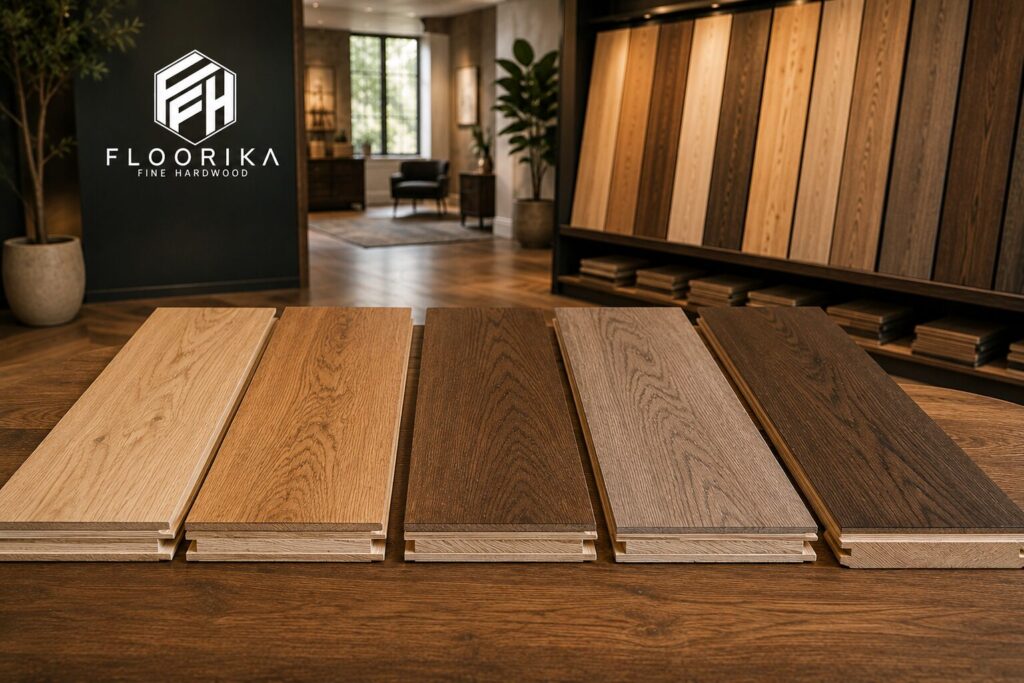
When selecting wood, lay out a few boards side by side to see how they complement one another. Some variation in color and grain is typical and can even enhance the overall design. However, significant color disparities within the same grade may indicate a quality control issue rather than a deliberate design choice.
Knots & Fillers
Character-grade wood often includes knots that are filled during production. Pay attention to how these fillers are applied. High-quality production will feature clean, flush, and well-matched fillers, while rough patches or mismatched colors can indicate less attention to quality.
Ask About the Finish and Certifications
Finish Quality
When choosing flooring, it’s essential to consider the finish quality. Look for factory-applied, UV-cured finishes that feature multiple coats and aluminum oxide reinforcement. These finishes are significantly more durable than thinner options or those applied on-site. Don’t hesitate to ask how many coats the floor has and what kind of finish system is used. The finish serves as the first line of protection for your flooring, so it’s not an area where you want to cut corners.
Moisture Content and Air Quality
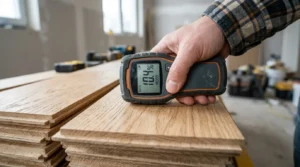
High-quality flooring is typically kiln-dried to achieve a moisture content appropriate for the local climate, generally between 6 and 9 percent in areas like New York. If the flooring arrives with an incorrect moisture level, it can shift as it adjusts to the building’s environment, leading to issues like gapping or cupping.
Additionally, consider certifications like CARB2 or TSCA Title VI, which limit formaldehyde emissions from core adhesives. This is particularly important in NYC apartments, where limited airflow and children spending extended time close to the floor make air quality a significant concern.
The Bottom Line on Choosing Quality Hardwood Floors
When shopping for flooring, many buyers overlook a crucial question: “Is this the right floor for my building and lifestyle?” While color and price often steal the spotlight in showrooms, factors like subfloor conditions, building humidity, the presence of pets, and maintenance needs can significantly impact your long-term satisfaction with the flooring.
That’s why we don’t stock low-quality engineered hardwood or lower-grade vinyl products. Every item in our inventory is carefully evaluated for stability, milling quality, wear layer, and long-term performance before it reaches the showroom floor. We believe that choosing the right flooring goes beyond surface appeal; it’s about finding the perfect fit for your home and lifestyle.
See It for Yourself at Floorika Fine Hardwood
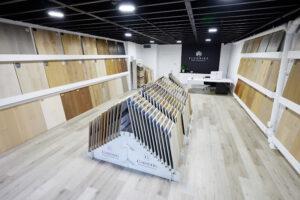
The best way to truly evaluate flooring is to see it in person, with the product in your hands and an expert by your side. Visit Floorika Fine Hardwood, and we’ll guide you through the details of wear layers, core construction, grades, and finishes using actual samples. Let us help you find the perfect flooring for your needs!