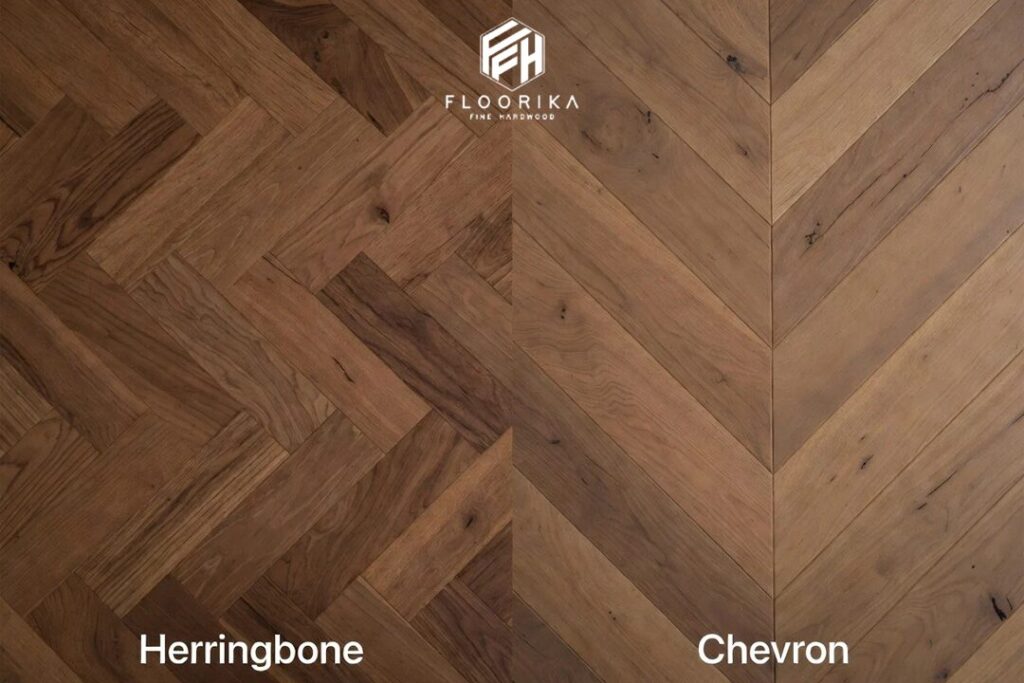
When brownstone owners visit our Brooklyn showroom with photos of a parlor floor, the conversation usually turns to patterned wood within minutes.
And almost every time, the same two names come up: chevron and herringbone.
The two get used interchangeably, but they are different floors. They are cut differently, installed differently, priced differently, and they set a completely different tone in a room.
In our experience, the chevron vs herringbone flooring decision comes down to one question: is your renovation honoring the brownstone’s period, or reinventing it?
Herringbone belongs to the first. Chevron belongs to the second. Here is why.
The Difference Lies in the Cut
Let’s break it down. Herringbone is made from simple rectangular blocks arranged at 90-degree angles, with the end of one block meeting the side of the next. This arrangement creates the classic, staggered zigzag look that’s been a hallmark of brownstones for over a century.
On the flip side, chevron blocks are cut at an angle, typically 45 or 60 degrees, allowing their ends to meet in a sleek, continuous V that runs down the length of the room.
That one difference in the cut drives everything else: the overall look, the installation process, and, most importantly, the price.
Why Herringbone Is Perfect for Restoration
If you’re restoring a brownstone, herringbone is a historically appropriate choice. This pattern was commonly used in townhouses and prewar homes, pairing naturally with original plaster details, marble mantels, and period millwork. In a carefully restored parlor room, a herringbone floor feels true to the home’s architectural character rather than standing out as a modern addition.
Because the blocks are plain rectangles, herringbone produces less cutting waste and is generally easier to install, which reflects in the final cost.
Why Chevron Suits a Modern Renovation
Chevron, on the other hand, carries a contemporary vibe. That unbroken V shape draws the eye down the length of a room, making it a striking choice for a gut-renovated parlor with an open-concept design. In a brownstone that embraces a clean, modern aesthetic, chevron feels fresh and contemporary rather than historical.
It is, however, the more complex of the two patterns. The mitered points must align perfectly throughout the room; the angled cuts generate more waste, and the installation requires more skilled labor. So, if you’re leaning toward chevron, be prepared for a heavier investment in both materials and labor.
The Crucial Step Nobody Thinks About: The Subfloor
Before diving into patterns, we always remind brownstone owners of one detail that is often overlooked: the subfloor. Many brownstones still have their original plank subfloors over joists that have settled unevenly for a century. Patterned floors can be unforgiving; any dip or loose board will signal through to the surface, causing squeaks and misalignment issues that can be quite noticeable.
You’ll need a plywood overlay or proper leveling as a first step. Investing in subfloor leveling can help maintain pattern alignment and reduce issues as the floor ages.
Why We Recommend Engineered Blocks for Pattern Floors
Patterned floors thrive on tight joints, and let’s face it, New York is hard on joints. With winter heating drying the apartments out and summer humidity wreaking havoc, solid wood blocks can expand and contract, jeopardizing that perfect pattern.
That’s why we approve engineered wood blocks for herringbone and chevron patterns, making them highly stable and perfectly compatible with concrete subfloors or over radiant heating. They’re far better at holding their shape through the seasons. Plus, pre-milled engineered blocks are typically easier to install than site-cut solid wood.
Choosing Scale, Color, and Finish
The size of the blocks plays a significant role in the overall vibe. Larger blocks convey a modern, architectural flair, while smaller blocks bring classic intricacy to the floor. In a parlor room with eleven-foot ceilings, larger formats stand strong.
For color, we often recommend European oak in a matte natural or soft smoked tone. Light tones brighten those lofty spaces, and a matte finish keeps the focus on the geometric beauty of the pattern without any glare getting in the way.
So Which Pattern Is Right for You?
If you’re committed to a faithful restoration, herringbone is your best bet; it’s the style that your brownstone was originally built around. But if your vision leans towards a modern gut renovation, chevron is your match; it reflects the ambition of your redesign.
Either way, remember that solid subfloor preparation comes first, and opting for engineered European oak blocks is a smart choice to ensure your pattern looks stunning for years to come.
And don’t forget, seeing is believing! Patterns can change quite a bit when viewed at full scale. A sample herringbone chip is a different experience from a spacious herringbone floor. Feel free to visit our Brooklyn showroom to see both patterns laid out, and bring photos of your parlor floor. We’d love to help you decide which pattern truly belongs in your beautiful brownstone!