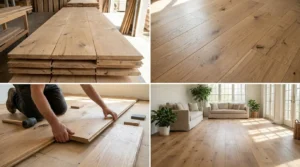
Most homeowners ask about installation time before they ask about price, and for good reason. New floors mean moving furniture, clearing rooms and sometimes living around a crew for several days. Building conditions add another layer in New Jersey, where 63.6% of housing units were built before 1980, and walls, floors, and openings in older homes may not match standard sizes. Planning Hardwood Floor Installation in Brooklyn goes much more smoothly once you know the stages involved and the time they take.
Most hardwood floor installations take 1 to 5 days of on-site work. The full project usually runs 1 to 3 weeks once delivery, acclimation, subfloor prep and any finishing are included.
Hardwood Floor Installation Timeline at a Glance
Project time covers far more than the days the crew spends laying boards. The table shows the typical length of all seven stages:
| Project Phase | Typical Time | What Happens |
| Measurement and selection | 1 to 3 days | Site visit, measurements and product choice |
| Delivery and acclimation | 3 to 14 days | Flooring adjusts to the home’s humidity |
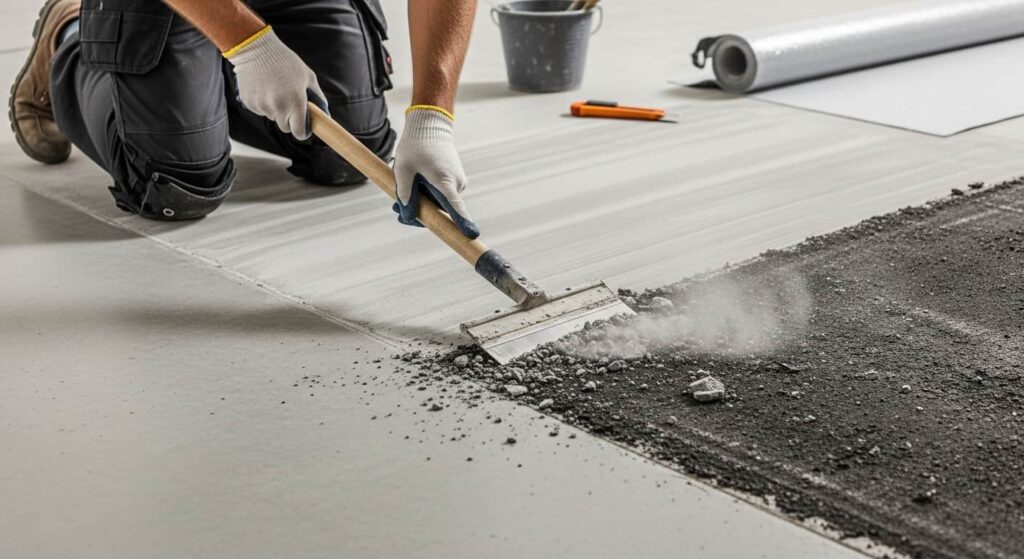
| Old floor removal | Half a day to 2 days | Carpet, tile or old wood comes up |
| Subfloor preparation | 1 to 3 days | Leveling, repairs and moisture testing |
| Installation | 1 to 5 days | Boards are nailed, glued or floated |
| Sanding and finishing | 3 to 5 days | Unfinished floors only |
| Curing | 1 to 30 days | Finish hardens before full use |
Prefinished floors skip the sanding stage and often wrap up in about a week. Unfinished solid hardwood usually takes the longest because the finishing work happens on site.
Hardwood Floor Installation Timeline by Phase
The stages below follow the order a professional crew works in. Time figures vary by home, yet most projects follow this sequence closely.
Measurement and Material Selection
Projects start with a site visit to measure rooms, check the subfloor and confirm the right product. This step usually takes 1 to 3 days, including time to compare samples and approve a quote. Material availability then decides the next part of the schedule. In-stock flooring can arrive within days, while special-order or custom products may take 2 to 8 weeks to ship.
Delivery and Acclimation
Wood flooring needs time to adjust to the temperature and humidity of your home before installation. Wood floors perform best when indoor conditions stay within 30 to 50% relative humidity and 60 to 80°F. Typical acclimation times look like this:
- Engineered hardwood: 3 to 5 days
- Solid hardwood: 7 to 14 days
- Exotic species: Often longer than domestic oak
Installers confirm readiness with a moisture meter instead of counting days alone. Keeping the heat or air conditioning running at normal living levels during this stage prevents delays.
Rushing this stage often causes delays far longer than the days it saves. Most inspection calls the NWFA receives involve moisture problems such as cupping, gapping and warping. Fixing a floor that moved after installation can mean replacing boards or waiting weeks for conditions to settle.
Old Floor Removal
Removal time depends on what currently covers the subfloor. Typical removal times include:
- Carpet and pad: A few hours per room
- Floating floors: Half a day for most apartments
- Glued-down wood or vinyl: 1 to 2 days
- Ceramic tile on mortar: 1 to 2 days or more
- Asbestos testing for old tile or black adhesive: several days when lab results are needed
Removal also creates debris that needs hauling, and building rules may limit when crews can carry it out. Some installations can go over the existing floor, and that choice saves this step entirely.
Prewar Floor Alert
Vinyl tiles and black mastic in older Brooklyn homes can contain asbestos. Testing before removal protects your household and prevents work stoppages. Certified abatement must happen before the flooring crew starts.
Subfloor Preparation
Subfloor work decides whether the new floor stays flat and quiet for years. Crews screw down loose panels, replace damaged sections, sand high spots and fill low areas. This stage usually takes 1 to 3 days. Moisture testing happens here too, and the difference between the flooring and the subfloor should stay within 4% for strip flooring and 2% for planks 3 inches or wider.
Brownstones and prewar apartments often need extra time at this stage. Uneven joists, old plank subfloors and patched areas from past renovations can add a day or two to the schedule.
Concrete subfloors in high-rise and newer buildings follow a different process. Crews test the slab for moisture, add a vapor barrier where needed and may pour self-leveling compound to flatten low spots. Self-leveling compound often needs about a day to dry before flooring goes down, and slab testing can add another day.
Installation Day
Actual installation is usually the fastest part of the project. A typical installation day follows this order:
- Remove baseboards and undercut door casings.
- Lay the underlayment or vapor retarder.
- Snap layout lines to keep rows straight.
- Install the starter rows along the longest wall.
- Fill the main field of the room.
- Cut and fit boards at doorways, closets and edges.
- Add trim, thresholds and transitions.
- Reinstall baseboards and shoe molding.
Professional crews of two typically lay 500 to 1,000 square feet per day on open, simple layouts. Floating floors install fastest because boards click together, while glue-down floors take longer because adhesive needs careful spreading.
Sanding Staining and Finishing
Unfinished hardwood needs sanding, optional stain and several coats of finish after installation. This work usually takes 3 to 5 days because coats must dry between applications. Oil-based stain and topcoats usually need about a day between applications, while water-based coats can often go on several hours apart. Most finish systems call for two to three topcoats. Prefinished floors arrive with the factory finish already applied and skip this stage completely.
Curing and Move-In
Finished floors need time before full use, even when they look dry. Typical wait times after the final coat include:
- 24 to 48 hours: Light foot traffic in socks
- 48 to 72 hours: Furniture placement using felt pads
- 2 to 4 weeks: Area rugs and heavy cleaning
- Up to 30 days: Full finish cure
Ventilation helps during this stage because finish fumes can linger. Concentrations of many VOCs are up to ten times higher indoors than outdoors, and fresh air keeps the home more comfortable while the finish cures. Prefinished floors are usually ready for use as soon as installation ends.
Installation Time by Room and Project Size
Project size changes the number of installation days more than any other factor. These estimates assume prefinished flooring and a prepared subfloor:
| Space | Approximate Size | Installation Time |
| Bedroom | 150 to 200 sq ft | 1 day |
| Living room | 300 to 400 sq ft | 1 to 2 days |
| One-bedroom apartment | 600 to 800 sq ft | 2 days |
| Two-bedroom apartment | 1,000 sq ft | 2 to 3 days |
| Full brownstone floor | 1,500 to 2,000 sq ft | 3 to 5 days |
| Staircase | 12 to 15 steps | Add 1 day |
Quick Math
Divide your square footage by 500 for a conservative estimate of installation days. A 1,200-square-foot home works out to about 2 to 3 days of installation.
Sample Timeline for a Brooklyn Brownstone Floor
This example shows a typical schedule for Hardwood Floor Installation in Brooklyn on a 1,200-square-foot brownstone floor using prefinished engineered oak:
- Day 1: Site visit, measurements and product selection
- Days 2 to 3: Delivery of in-stock flooring and start of acclimation
- Days 4 to 7: Acclimation continues while moisture readings are tracked
- Day 8: Carpet removal and subfloor repairs
- Days 9 to 11: Installation of the floor, trim and thresholds
- Day 12: Final walkthrough, cleanup and furniture returned on felt pads
Unfinished solid oak in the same home would add about 1 to 2 weeks for longer acclimation, sanding and finishing coats. Board approvals in a co-op could also add time before the first day.
Factors That Change the Installation Timeline
Two projects of the same size can take very different amounts of time. These factors make the biggest difference:
- Prefinished or unfinished flooring: Prefinished boards skip on-site sanding and finishing. Unfinished floors add 3 to 5 days for that work.
- Solid or engineered hardwood: Engineered boards usually acclimate faster and suit concrete slabs. Solid hardwood often needs one to two weeks of acclimation before work starts.
- Installation method: Floating floors install fastest, and nail-down floors fall in between. Glue-down work adds setting time for the adhesive.
- Patterned layouts: Herringbone, chevron and Versailles panels need precise layout and cutting. These designs can take up to twice as long as straight planks.
- Stairs and room complexity: Staircases add about 1 day each. Closets, angled walls and many doorways slow the pace further.
- Furniture and access: Rooms full of furniture need clearing first. Walk-up buildings and small elevators also slow material delivery.
- Season and humidity: Humid Brooklyn summers and dry radiator-heated winters both push wood moisture away from the target range. Running air conditioning, a dehumidifier or a humidifier can add a few days before installers approve the start.
Knowing these factors early helps you set a realistic move-back date. Your installer should explain which of them apply to your home before the schedule is set.
Visit our Park Slope showroom to see herringbone, chevron and Versailles patterns in person before you plan your schedule. Floorika Fine Hardwood keeps most wide plank European oak and solid hardwood in stock, and our team can map out the installation time for the pattern you choose. Stop by 558 4th Avenue without an appointment, or call or text 212.575.5532.
Hardwood vs Laminate and Vinyl Installation Time
Hardwood takes longer to install than most other floors because of acclimation, fastening and optional finishing. Floating floors move much faster on the same footprint:
- Prefinished engineered hardwood: 2 to 3 days for 1,000 sq ft after acclimation
- Unfinished solid hardwood: 1 to 3 weeks in total, including finishing
- Waterproof laminate: about 1 to 2 days for 1,000 sq ft
- Luxury vinyl plank: about 1 to 2 days for 1,000 sq ft
Laminate and vinyl often need only a short conditioning period of around 48 hours, and both are ready for use right after installation. Hardwood still offers the longest service life because solid and many engineered floors can be sanded and refinished.
Brooklyn Building Rules That Affect Scheduling
Local rules can add days to Hardwood Floor Installation in Brooklyn even when the floor work itself goes smoothly. Construction in New York City is generally approved on weekdays between 7:00 a.m. and 6:00 p.m., and many buildings set tighter hours of their own. Co-ops and condos often add these requirements:
- Alteration agreements and board approval
- Certificates of insurance from the installer
- Freight elevator reservations for deliveries
- Work hours limited to weekday daytime
- Rules on debris removal and hallway protection
Board approval alone can take several weeks in some buildings. Starting that paperwork while you choose flooring keeps the installation date on track.
Co-op Checklist
✓ Alteration agreement signed
✓ Installer insurance certificate sent to management
✓ Freight elevator booked for delivery day
✓ Work hours confirmed with the super
✓ Neighbors notified about noise days
Ways to Keep Your Installation on Schedule
Good preparation on your side keeps the crew working instead of waiting. Follow these steps before installation begins:
- Choose in-stock flooring to avoid shipping delays.
- Clear furniture, rugs and fragile items before the crew arrives.
- Keep heating or air conditioning running at normal settings during acclimation.
- Approve the layout and pattern direction before installation day.
- Arrange building approvals and elevator bookings early.
- Plan where pets and family members will stay on finishing days.
Small preparation steps like these often save a full day of labor. Clear communication with your installer also prevents last-minute changes that push the schedule back.
FAQs
How long do you have to stay off hardwood floors after installation?
Prefinished floors are usually ready for foot traffic right after installation. Site-finished floors need about 24 to 48 hours before light foot traffic and 2 to 4 weeks before area rugs go down.
How long does it take to install hardwood floors in one room?
Most single rooms of 150 to 400 square feet take 1 to 2 days to install using prefinished flooring. Acclimation, subfloor repairs or site finishing add extra days to that schedule.
Can hardwood floors be installed in winter?
Hardwood floors can be installed in winter when the home stays heated at normal living temperatures. Dry radiator heat lowers indoor humidity, and installers may need a humidifier to bring the space back to 30 to 50% before work starts.
Can you stay in your home during hardwood floor installation?
Most homeowners can stay home during prefinished installations, though the work area stays off-limits during the day. Site-finished floors are different because sanding dust and finish fumes make a short stay elsewhere more comfortable.
What is the Rule of 3 for flooring?
The Rule of 3 suggests using no more than three different flooring types or colors in one home. Keeping to three creates smoother transitions between rooms and makes the home look connected instead of patched together.
Are prefinished hardwood floors good?
Prefinished hardwood floors are a strong choice for many homes. The factory finish is hard and even, installation is faster, and you avoid on-site sanding dust and fumes. Edges may show slight bevels between boards.
Is it hard to install a hardwood floor yourself?
Hardwood installation requires precise layout, the right tools and subfloor experience. First-time installers often lay about 200 to 250 square feet per day. That pace is far slower than a professional crew, and mistakes in nailing or spacing are costly to fix.
Takeaway
Hardwood floor installation usually takes 1 to 5 days on site and 1 to 3 weeks from start to finish. Acclimation, subfloor work and site finishing account for most of the extra time, while building rules can add more in co-ops and condos. Planning Hardwood Floor Installation in Brooklyn around these stages gives you a realistic date to move back into finished rooms.
Our team supplies and installs wide plank European oak, solid hardwood and patterned floors across all five boroughs. Most materials ship from stock, and our deliveries include lift-gate service and scheduled appointments to keep your timeline moving. Call or text 212.575.5532 to plan your installation date.