When it comes to choosing modern, stylish, and practical flooring for your home, Luxury Vinyl Plank (LVP) and Hybrid Flooring are two of the most compelling options. Both offer waterproof performance and attractive designs, but their underlying construction, behavior, and long-term performance differ in important ways. This guide explores everything you need to know—so you can make an informed decision based on your lifestyle, space, and budget.
What Exactly Are We Talking About?
What is Luxury Vinyl Plank (LVP)?
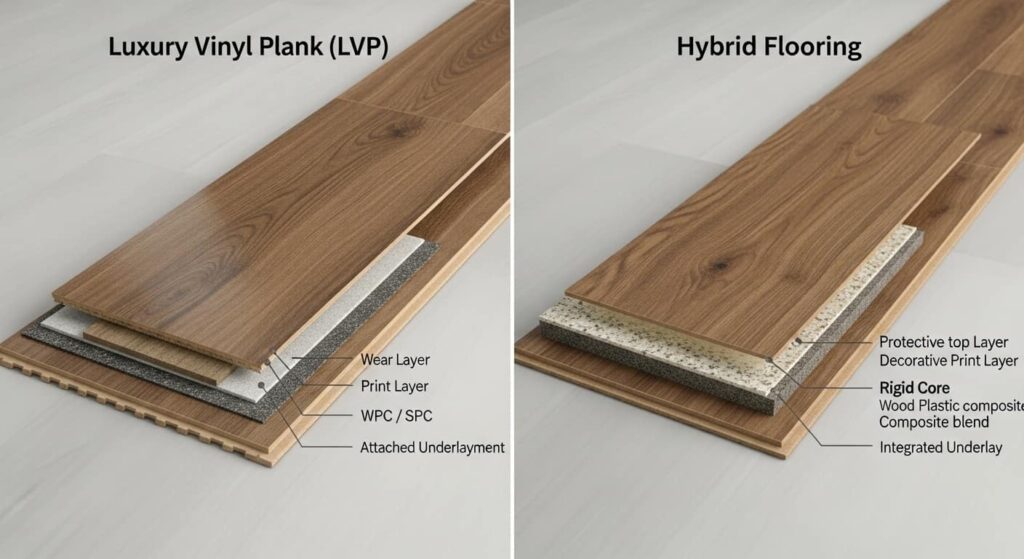
Luxury Vinyl Plank is a resilient flooring material made primarily of PVC (polyvinyl chloride), layered to deliver comfort, flexibility, and style. Its structure typically includes:
- Wear layer: A scratch- and stain-resistant top coating.
- Design/print layer: High-quality image layer that mimics wood, stone, or tile.
- Core layer: Flexible PVC core provides some cushioning.
- Backing layer: Stabilizes the plank and helps resist moisture.
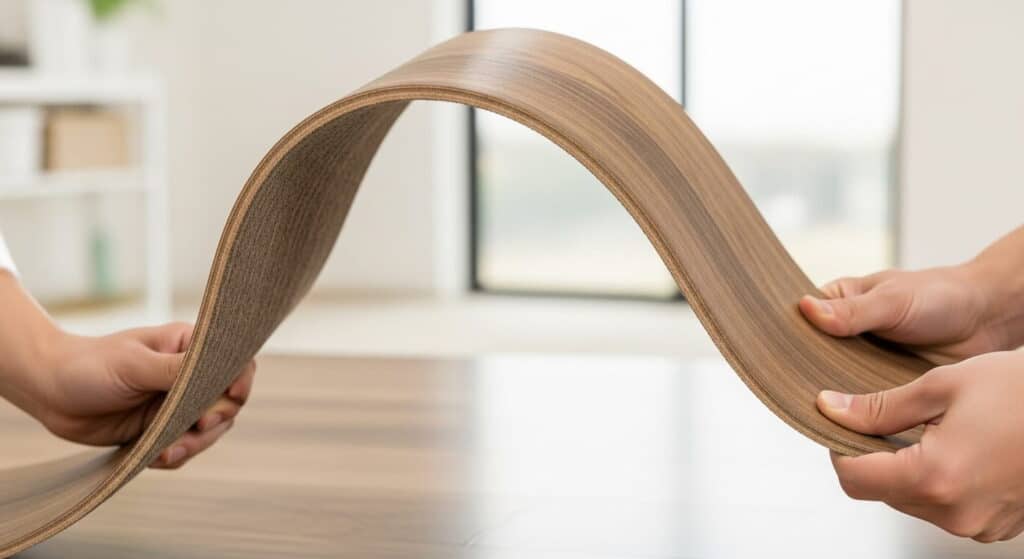
Because of this construction, LVP feels softer underfoot than more rigid flooring types and can often be installed via click-lock or glue-down methods, depending on the product.
What is Hybrid Flooring?
Hybrid flooring is a more recent innovation, combining the best qualities of vinyl and laminate. Its most distinctive feature is a rigid core, which is usually made from SPC (Stone Plastic Composite) or WPC (Wood Plastic Composite). Here’s what that means:
- SPC Core: Made from limestone powder + PVC; very dense, extremely stable.
- WPC Core: Made from PVC + wood fibers + a foaming agent; softer than SPC but still very stable.
- Wear Layer: Thick urethane or PVC layer (often between 0.5 mm and 0.7 mm) for scratch resistance.
- Underlay: Many hybrid products come with integrated underlayment (EVA or IXPE foam) for sound absorption and comfort.
This rigid core gives hybrid flooring superior dimensional stability, especially in environments with temperature fluctuations or moisture changes.
Side-by-Side Comparison: LVP vs Hybrid
Here’s a detailed comparison of how Luxury Vinyl and Hybrid Flooring stack up across key performance factors:
| Feature | Luxury Vinyl Plank (LVP) | Hybrid Flooring (SPC / WPC) |
|---|---|---|
| Core Material | Flexible PVC | Rigid SPC (stone) or WPC (wood) |
| Wear Layer | Varies by product; protects design | Often thicker in hybrids (0.5mm–0.7mm) |
| Durability / Impact Resistance | Good, but may dent under very heavy or sharp objects | Very high: SPC core is dense and resists dents better |
| Water Resistance | Highly water‑resistant (depending on installation) | Fully waterproof; SPC/WPC cores do not swell |
| Temperature Stability | Flexible — can expand/contract moderately under heat | Extremely stable: SPC handles from –20°F to ~120–140°F in some designs. |
| Installation | Click-lock or glue-down | Click-lock floating systems, often with 5G locking mechanism |
| Comfort & Acoustics | Softer underfoot; may need separate underlay | Often includes built-in underlayment for better sound reduction |
| Longevity | ~7–15 years (depending on wear layer) | ~15–25+ years for well-made hybrid flooring |
| Cost | Usually more affordable (material + install) | Higher upfront cost due to core and construction |
Technical Strengths & Trade-Offs
Core & Material Construction
- SPC Core (Stone Plastic Composite): Extremely dense. Because of limestone content, SPC provides outstanding dent resistance and dimensional stability under temperature fluctuations.
- WPC Core (Wood Plastic Composite): Softer than SPC and offers a more cushioned feel because of its foaming agent.
- LVP Core: Pure PVC, which makes it more flexible but less rigid. It’s better for comfort but not as strong against heavy indentations.
Wear Layer & Surface Protection
- The wear layer is critical for scratch/stain resistance. In hybrid flooring, wear layers often range from 0.5 mm to 0.7 mm, which gives much greater protection compared to many vinyl planks.
- Enhanced coatings: Some products include UV-resistant layers, antimicrobial treatments, or ceramic bead infusions to boost durability.
- According to a manufacturer’s whitepaper, a thick wear layer plus a dense core helps hybrids resist both scratches and hard impacts.
Stability & Environmental Resistance
- Hybrid flooring, especially SPC, performs extremely well in temperature extremes. For example, some SPC planks can handle –20°F to +140°F, according to SPC flooring manufacturers.
- Because of the rigid core, hybrid floors are less prone to expansion or contraction, making them a safer choice for rooms that get direct sunlight or experience large temperature swings.
- LVP, on the other hand, can be more flexible, and without proper installation (especially in hot or cold environments), there’s risk of warping or seams opening.
Installation & Sound Performance
- Most hybrid floors use a 5G click-lock mechanism, which is user-friendly and doesn’t require glue.
- Many hybrid planks come with a pre-attached underlayment (like IXPE foam), improving acoustics and making the floor feel more solid.
- LVP installation is more flexible: glue-down or floating click systems both exist.
- However, LVP may require a separate underlay for sound dampening, especially in multi-story homes.
Durability, Longevity & Maintenance
-
Lifespan
-
LVP: Typical life is about 7–15 years, depending largely on wear layer thickness and quality.
-
Hybrid (SPC/WPC): With a quality wear layer, these floors often last 15–25+ years.
-
-
Indentation & Dents
-
SPC hybrid floors are very resistant to dents due to their dense core.
-
LVP is more susceptible to denting under very heavy furniture or sharp, heavy objects because of its softer core.
-
-
Scratch Resistance
-
The wear layer on high-quality hybrid floors helps prevent scratches even under heavy use, pets, or furniture.
-
LVP scratch resistance is also good, but depends heavily on the wear layer’s quality and thickness.
-
-
Cleaning & Care
-
For both flooring types: sweep or vacuum regularly, mop with a mild cleaner, immediately wipe up spills.
-
Avoid very abrasive cleaning tools; use pH-neutral cleaners to preserve the wear layer.
-
Comfort, Aesthetics & Design Options
-
Underfoot Feel
-
Hybrid: Feels firm and stable because of rigid core, but built-in underlay can dampen noise.
-
LVP: More flexible and slightly softer underfoot, which some people find more comfortable for living spaces.
-
-
Acoustic Properties
-
Hybrid with pre-attached underlay often has better sound absorption, reducing hollow or “clicky” noise.
-
LVP, without underlay, might need an extra layer to control sound.
-
-
Realism and Texture
-
Both options offer realistic wood or stone designs.
-
Hybrids often feature deep embossing and texture to closely mimic real wood or tile.
-
LVP comes in a wide variety of styles, colors, and plank sizes, giving great design flexibility.
-
Ideal Use Cases: When to Pick Which
Here are some scenarios to help you decide between the two:
-
Choose LVP if you:
-
Want a softer, more flexible floor.
-
Are working within a tight budget.
-
Need waterproof flooring for kitchens, bathrooms, or basements but don’t expect extreme temperature shift.
-
Prefer glue-down or have DIY confidence.
-
-
Choose Hybrid if you:
-
Want maximum durability and dent resistance.
-
Are installing in a space with temperature extremes (e.g. sunroom, very hot or cold rooms).
-
Need better sound insulation (especially in apartments or multi-level homes).
-
Are okay paying more upfront for long-term performance.
-
Pros & Cons (Summarized)
LVP (Luxury Vinyl Plank)
- Pros: Flexible, comfortable, waterproof, cost-effective, many design options
- Cons: Can dent, less rigid, may require underlay for sound
Hybrid (SPC/WPC)
- Pros: Extremely stable, very durable, excellent for moisture and temperature changes, built-in underlay for acoustics
- Cons: Harder underfoot, higher cost, less “give” than LVP
Common Questions (FAQs)
Q: Can hybrid flooring be used in basements?
Yes — hybrid is fully waterproof and very stable, making it ideal for basements.
Q: Is LVP safe for sunrooms or areas with direct sunlight?
Not always. Because PVC can expand in heat, LVP may warp under intense sunlight unless properly installed and acclimated. Hybrid SPC is generally more dimensionally stable in such conditions.
Q: How long will each flooring last?
- LVP: ~7–15 years, depending on quality and use.
- Hybrid: ~15–25+ years for well-made SPC or WPC products.
Q: Do hybrid floors need a separate underlayment?
Usually not — many hybrid floors come with pre‑attached underlayment, which reduces installation steps and improves acoustic performance.
Expert Tips from Floorika Fine Hardwood
- Test samples: Walk on both LVP and hybrid to see which feels right.
- Check room lighting: Flooring looks different in natural and artificial light.
- Plan for furniture: Consider furniture weight and potential scratches.
- Maintenance: Both floors are easy to clean, but hybrid requires less upkeep over time.
Final Thoughts
Both Luxury Vinyl Plank and Hybrid Flooring are excellent choices, but the right one depends on your needs. LVP is comfortable, affordable, and waterproof, perfect for kitchens, bathrooms, and apartments. Hybrid is solid, durable, soundproof, and long-lasting, ideal for high-traffic areas and homeowners who want premium performance.
At Floorika Fine Hardwood, we offer premium luxury vinyl floors in Brooklyn and next-generation hybrid flooring, ensuring waterproofing, scratch-resistance, and soundproofing. Schedule your free consultation today and find the floor that perfectly suits your home.